Home › Kuala Lumpur › Batu Caves
Kuala Lumpur · Batu Caves
Batu Caves
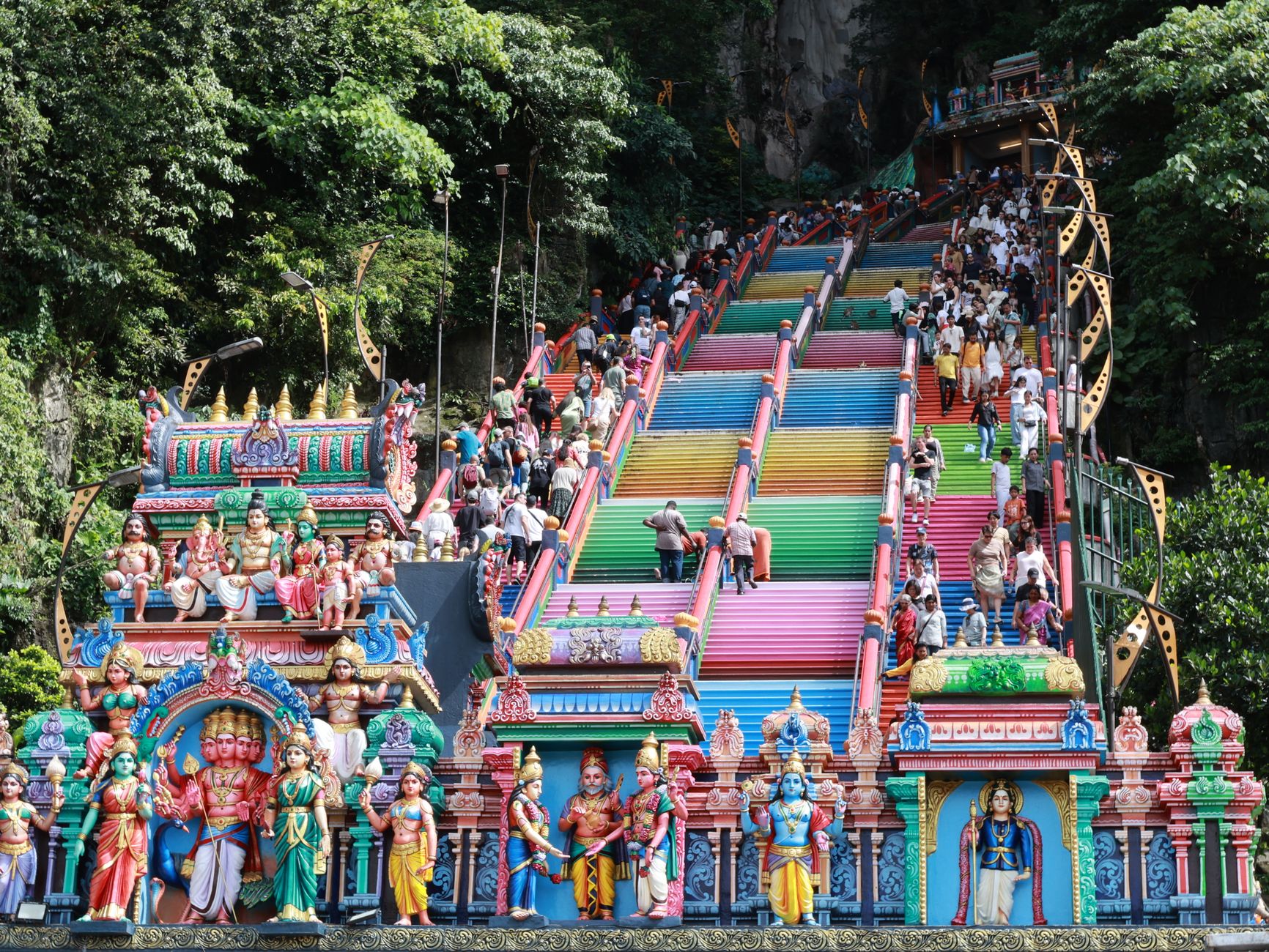
272 rainbow-painted steps to a limestone cave temple, guarded by a 42-metre gold statue and a lot of confident monkeys.
Heads up: some links here are affiliate links — book through them and I may earn a small commission at no extra cost to you. It never changes what I recommend.
Batu Caves is a limestone hill on KL's northern fringe, turned into a Hindu temple complex over a century ago — you'll know it from the photo before you ever go: 272 steps painted every colour of the rainbow, climbing past a gold statue of Murugan taller than a ten-storey building. It's free to enter the main cave, it's a short train ride from KL Sentral, and it's real enough that a plane-worthy photo op takes a real physical climb, real heat, and real monkeys who'd rather have your sandwich than pose for you.
What is Batu Caves, actually
It's an active Hindu temple built into a natural limestone cave system, centred on the god Murugan — not a museum piece or a theme park, even though it photographs like one. The caves have been a sacred site since the late 1800s, and the temple inside the main cavern still holds daily worship. Treat it the way you'd treat any working place of worship: with the steps as the climb, not the whole point.
| Steps | 272, painted in rainbow colours since a 2018 repaint |
|---|---|
| Main cave entry | Free |
| Murugan statue | About 42.7 metres tall — one of the tallest statues of a Hindu deity anywhere |
| Getting there | KTM Komuter from KL Sentral, roughly 30 minutes, direct to Batu Caves station |
The climb: steps, the main cave, and the monkeys
The 272 steps are steep enough that you'll be sweating by the halfway mark, especially if you go mid-morning. At the top, the Temple Cave (sometimes called the Cathedral Cave for its scale) opens into a vast natural chamber with shrines set into the rock and a shaft of daylight falling through a gap in the ceiling — it's genuinely one of the more atmospheric interiors in KL, cave smell and all.
Long-tailed macaques live on the steps and around the statue, and they are bold, not cute-and-shy. They will snatch food, drinks, and anything dangling from an open bag, and they can and do bite if cornered or provoked. Don't feed them — it's what keeps them aggressive around visitors in the first place — and keep your bag zipped and your food out of sight rather than in hand. This isn't spectacle, it's just how you avoid a scratch that sends you looking for a clinic.
Because it's a working temple, dress modestly: shoulders and knees covered. Sarongs are available to borrow or rent at the entrance if you turn up in shorts, the same system you'll see at temples across the region. Shoes come off before the inner cave.
Is Batu Caves worth the trip?
Yes, for a morning — it's cheap, fast to reach, and the statue-plus-steps view is worth seeing in person rather than just in photos. Where it can disappoint: it's genuinely crowded, genuinely hot by late morning, and the climb plus the market stalls at the base can feel more like a tourist funnel than a quiet cave visit. Go early, budget under half a day, and you'll leave with the photo and the atmosphere without the worst of the crush.
The Dark Cave and the other caves
Below the main steps, a separate ticketed path leads to the Dark Cave, an undeveloped cave system run as a conservation and education site rather than a temple — home to rare cave-adapted species you won't see anywhere else nearby. It's a guided walk only, not a wander-in, and numbers are limited, so it doesn't have the crowds of the main steps.
| Dark Cave tour | Guided only, separate ticket from the temple |
|---|---|
| Dark Cave price | Check current pricing on the day |
| Other caves | Smaller Art Gallery and Museum caves sit at the base, included in the general visit |
There are also a couple of smaller caves at the foot of the hill, with statues and painted scenes depicting Hindu stories — worth a quick look on your way to or from the steps, and nowhere near as demanding as the climb.
Thaipusam: come with respect, or come another time
Once a year, usually in late January or early February on the Tamil month of Thai, Batu Caves becomes the centre of Malaysia's biggest Thaipusam celebration — hundreds of thousands of devotees, many carrying elaborately decorated kavadi (ceremonial structures, some pierced through skin and cheeks as an act of penance) up the 272 steps in a procession that runs for days.
It is a major religious festival, not a spectacle staged for tourists, and the crowds and closures around it are enormous. If you want to witness it, go with that framing — dress modestly, keep a respectful distance from devotees in procession, and don't treat the piercings as a photo prop. If what you actually want is a quiet, unhurried look at the caves, avoid this window entirely and pick almost any other week of the year.
Getting there: train vs Grab, and timing it right
The KTM Komuter train from KL Sentral runs direct to Batu Caves station, which sits right at the foot of the steps — it's the easiest and cheapest way in, no traffic to fight. A works too and drops you closer to the entrance, but it's slower at peak times as the roads around the complex jam with tour buses and parking traffic.
| Train | KTM Komuter, direct from KL Sentral, about 30 minutes |
|---|---|
| Grab/taxi | Door-to-door but subject to traffic, especially weekends and festival days |
| Best time | Arrive by mid-morning — heat, crowds and tour-bus traffic all build through the day |
Go as early as you can manage — the steps have no shade, and by late morning you're climbing them in full sun with the crowds thickest. An early train out also means you can pair the visit with a full afternoon back in the city, rather than losing the whole day to one hill.