Home › Kuala Lumpur › Chinatown & Merdeka
Kuala Lumpur · Chinatown & Merdeka
Chinatown & Merdeka Square
The colonial square and the market streets beside it — where KL was founded and where it declared itself its own.
This is old KL — the part that existed before the towers did. Everything sits within a twenty-minute walk: Merdeka Square, where independence was declared; Petaling Street, Chinatown's covered market spine; Central Market, now a crafts hall; and Masjid Jamek, planted right at the river junction the city takes its name from. It's flat, shaded in patches, and the easiest heritage loop in the city.
Why this is the founding square, not just a park
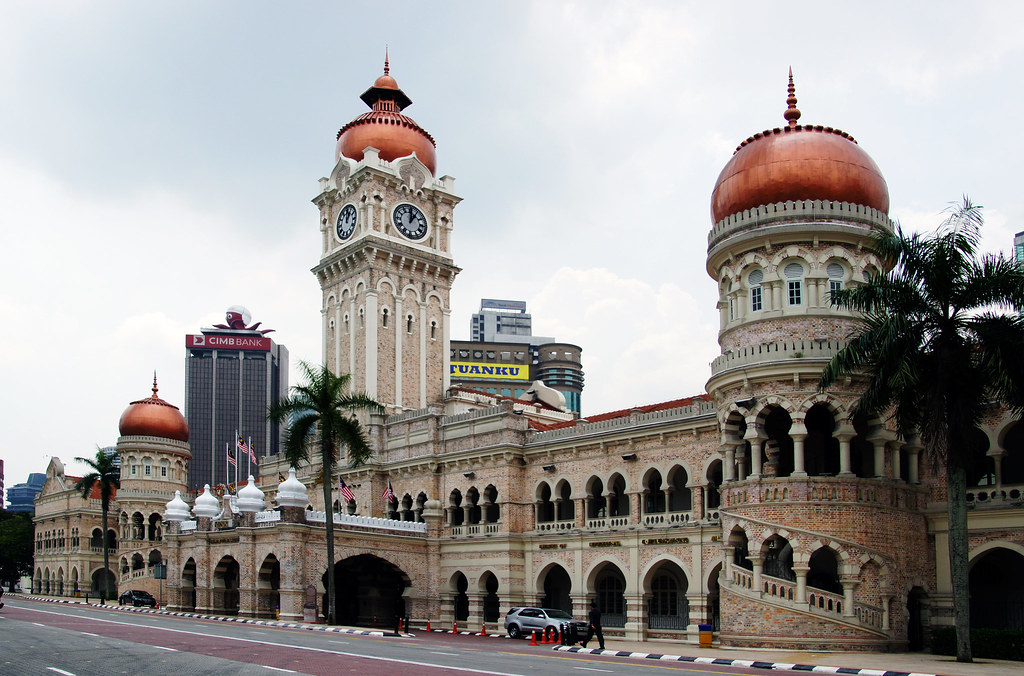
Merdeka Square is a cricket-pitch-sized field, but it's the reason KL exists where it does. The British colonial administration built its government and club buildings around it, and it's the site where the Union Jack came down and the Malaysian flag went up at midnight on 31 August 1957 — the country's independence moment, not just the city's. The Sultan Abdul Samad Building on its east side is the one photo everyone takes: copper onion domes and horseshoe arches in a Moorish-revival style the British used across colonial Malaya, now housing court offices rather than the government departments it was built for.
Petaling Street is a market first, a street second
Petaling Street is Chinatown's spine, and most of it runs under a permanent arched roof, which is the detail people forget until they're standing in it during a downpour and staying dry. By day it's a produce and hardware market with generations-old shopfronts behind the stalls; by evening the stalls flip to food and the counterfeit-goods trade the street is best known for abroad. The status varies stall to stall in a Chinese-majority market, worth asking rather than assuming if it matters to you.
Central Market is crafts now, not produce
Confusingly, Central Market (Pasar Seni) isn't where the produce is anymore — that moved decades ago. What's left is a 1930s Art Deco market hall, restored and handed to crafts, batik, and souvenir vendors, with a row of food stalls on the upper floor. It's a fifteen-minute walk from Petaling Street along the river side of the old town, past the row of pre-war shophouses that give this stretch its character.
Masjid Jamek sits on the reason the city is here
Masjid Jamek stands exactly at the confluence of the Klang and Gombak rivers — the "muddy river mouth" the city's name literally describes, and the spot where Chinese tin miners founded the settlement in the 1850s. The mosque itself, striped brick and onion domes, dates to 1909 and was the city's principal mosque before the National Mosque was built. A raised riverside walkway now threads along the confluence itself, letting you stand at the actual junction rather than just read about it on a plaque.
| Merdeka Square | Free, open-air, always accessible |
|---|---|
| Petaling Street | Covered market, busiest evenings and weekends |
| Central Market | Roughly 10am–10pm, small entry-free crafts hall |
| Masjid Jamek | Non-Muslim visiting hours restricted around prayer times |
Getting here without a car
Skip driving entirely — this loop sits on top of KL's rail interchange. Pasar Seni LRT/MRT station drops you at Central Market; Masjid Jamek station is its own stop at the confluence; both are a few minutes' walk from Merdeka Square and Petaling Street. It's the one part of KL where a is more likely to slow you down in the market-hours traffic than save you time — see getting around Kuala Lumpur for the wider transport picture.
</content>