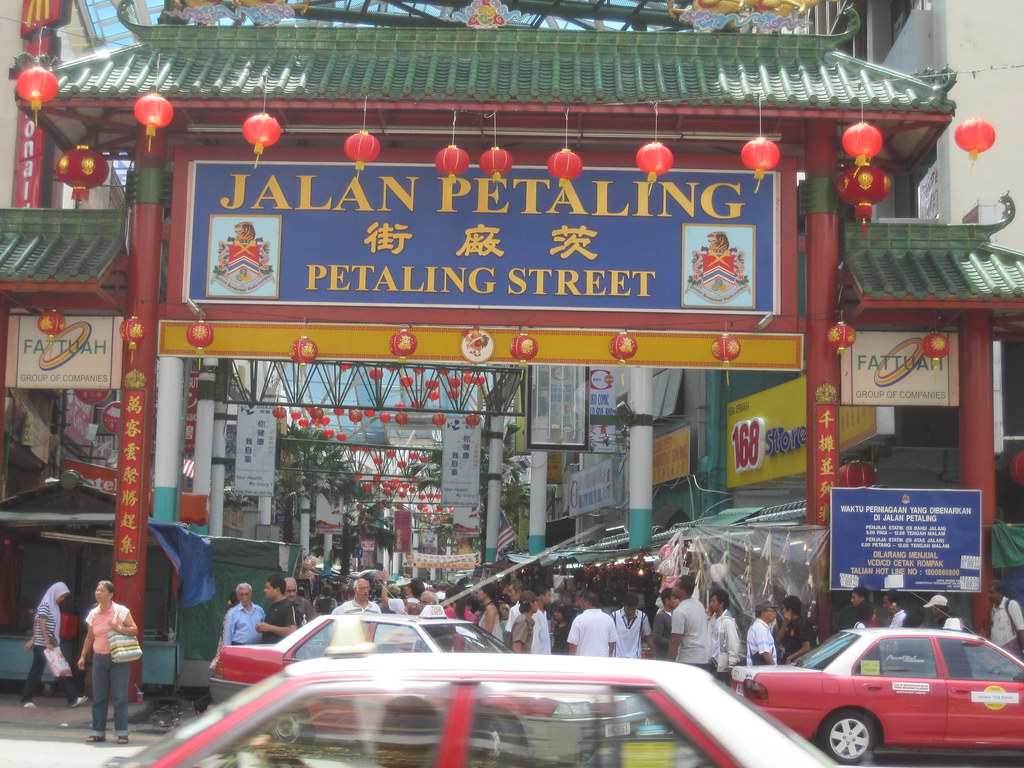
Petaling Street is KL's Chinatown market: a stretch of road under a distinctive green arched roof, packed with stalls selling counterfeit watches, bags and trainers, wrapped around a genuinely old neighbourhood of hawker food, stalls and two of the city's oldest temples. It's touristy, the roof is there because the fakes trade needed shade and crowd control, and it's still worth the visit — for the food and the buzz, not for what's on the tables.
What it actually is
The street itself runs through the historic Chinese quarter of KL, Chinatown, and by day it looks fairly ordinary — shopfronts, kopitiam, the odd hardware store. From late afternoon the stalls go up under the covered roof and the counterfeit trade takes over: bags, watches, sneakers, football shirts, sunglasses, all openly branded and openly fake. Selling counterfeit goods is illegal in Malaysia and enforcement raids do happen here from time to time, though the stalls are usually back within days . Buying a fake is a personal call — some travellers treat it as part of the theatre of the street, others skip it entirely — but it's worth knowing what you're looking at rather than assuming it's a grey area. It isn't.
| Stalls open | Roughly 4–5pm to around 10–11pm; quiet by day |
|---|---|
| Best time | Evening, once the roof stalls are up and the heat's dropped |
| Nearest LRT/MRT | Pasar Seni station, a few minutes' walk |
| Bargaining | Expected — first price is a starting point, not the price |
The food is the real reason to come
Under and around the same roof, Petaling Street has some of the oldest hawker stalls in the city — the kind that have been run by the same families for decades, doing one or two dishes each: claypot rice cooked over charcoal, wonton noodles, fried oyster omelette, herbal soups. Step off the main strip into the surrounding lanes and you hit the older kopitiam, the coffee-shop diners that predate the tourist trade by generations and still run mostly on local custom. This is the contrast that makes the street worth the detour — one layer built for visitors, another that's been feeding the neighbourhood since long before anyone sold a fake watch here.
Two temples bookend the area and are both worth a few minutes even if you're not stopping for the market. Sri Mahamariamman Temple, KL's oldest Hindu temple, sits at the Chinatown edge with an elaborately carved tower over its entrance. Guan Di Temple, dedicated to a Chinese god of war and, locals will tell you, of business and loyalty too, is a smaller, quieter stop a short walk from the market stalls — incense smoke, red lanterns, none of the street's bargaining noise.
How the bargaining works
Prices on the stalls are opening offers, not fixed prices — the first number you're quoted is rarely the number you should pay. A polite counter-offer, a willingness to walk away, and checking a couple of stalls selling the same item are the basics; vendors expect it and the process is part of the street's character rather than a hostile one. Cash in moves things along faster than a card, and it's worth having smaller notes so change isn't part of the negotiation.
Getting there
Petaling Street sits inside Chinatown, walkable from Pasar Seni LRT/MRT station in a few minutes, and close enough to Central Market and Merdeka Square that most people fold all three into one loop on foot. A works fine too, though parking directly on the street isn't really an option once the stalls are up — better to be dropped a block or two away and walk in. options sit alongside the Chinese hawker stalls, so it's an easy street to eat on whatever you do or don't eat.
The honest verdict
Petaling Street is touristy, the goods on the tables are fake, and none of that is a secret to anyone who works here. Come anyway, in the evening, for the food, the temples either side, and the sheer density of the place — just treat the bargaining as the point rather than the problem, and don't mistake what's on the stalls for what makes the street worth visiting.