Home › Kuala Lumpur › Putrajaya
Kuala Lumpur · Day trips
Putrajaya
A spotless, purpose-built government city on a lake — striking architecture and photogenic bridges, best done as a half-day out.
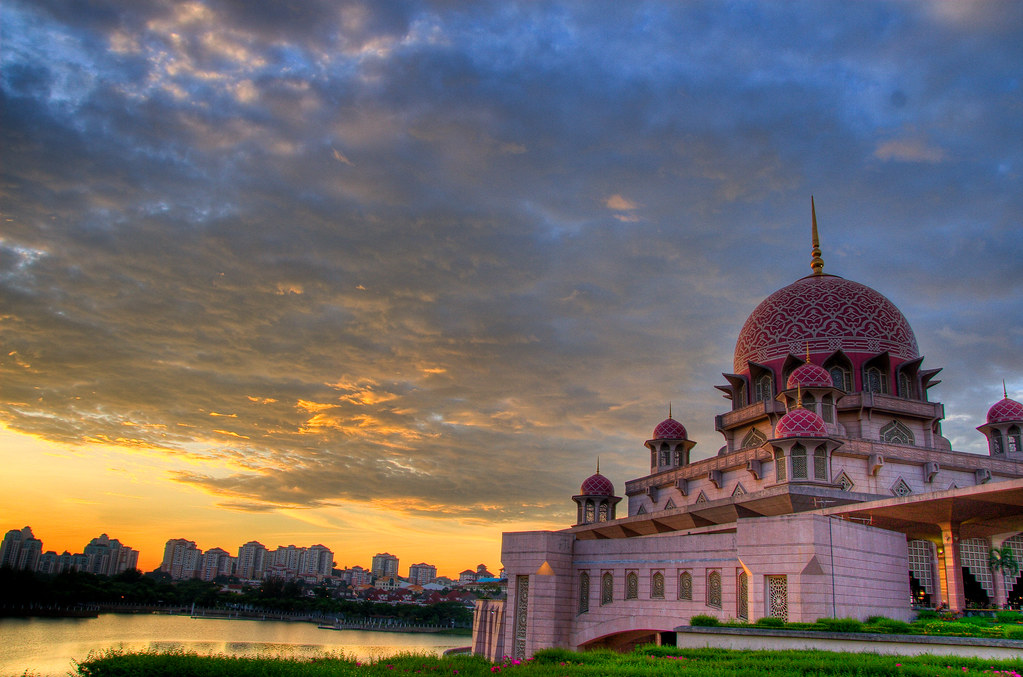
Putrajaya is Malaysia's federal administrative capital, built from scratch from the 1990s on a patch of land about 25km south of KL, roughly halfway to KLIA. It's where the Prime Minister's office and most government ministries sit, arranged around an artificial lake with a pink mosque on the water, a steel-domed mosque on a hill, and a boulevard wide enough to land a plane on. It's not a neighbourhood you wander into by accident — you go to Putrajaya on purpose, for a few hours, to look at it.
What it actually is
Kuala Lumpur is still the country's commercial capital, but in 1999 the government began moving out of the old colonial-era buildings downtown and into a new city built for the job — wide roads, generous setbacks, everything zoned and landscaped from a blank plan rather than grown in over a century. The result reads less like a Malaysian city and more like a government campus the size of a city: clean, quiet, and short on the street life that makes KL itself interesting. That trade-off is the whole story of Putrajaya, and it's worth knowing before you go so you don't expect a lively town centre and leave disappointed.
| Distance from KL | About 25km south of the city centre, close to KLIA |
|---|---|
| Putra Mosque | Pink rose-granite mosque on Putra Square, built mid-1990s |
| Iron Mosque | Tuanku Mizan Zainal Abidin Mosque, steel and glass, on a hill above the lake |
| Dress code | Robes available on loan at both mosques for visitors dressed too casually |
The pink mosque and the iron one
Putra Mosque is the postcard image of Putrajaya — pink rose-granite walls and dome, sitting right on the edge of the lake next to Putra Square and the Prime Minister's old office building, the Perdana Putra, with its own onion domes behind. It's an active mosque, not a museum, so visits outside prayer times are the norm and modest dress is expected; robes are usually available to borrow at the entrance if you turn up in shorts or a sleeveless top.
Across the water, on higher ground, is the newer Tuanku Mizan Zainal Abidin Mosque, better known as the Iron Mosque for its steel and glass construction — a deliberate contrast to Putra Mosque's stone, and a good reason to see both rather than treat them as duplicates of each other. Same etiquette applies: it's a working mosque, so time your visit around prayers and dress accordingly.
The boulevard, the bridges, and the lake
Persiaran Perdana is the ceremonial boulevard that runs through the government precinct — absurdly wide, lined with ministry buildings and roundabout monuments, and built for parades and motorcades rather than foot traffic. It photographs well precisely because it's so empty; don't expect to find much to do on it beyond looking and taking pictures.
The lake itself is the other half of the appeal. Several bridges cross it, each a different design — the cable-stayed Seri Wawasan Bridge and the arched Seri Saujana Bridge among the more photographed — and a lake cruise runs short boat trips past the mosque and the bridges, which is the easiest way to see the skyline from the water rather than the road.
Getting there, and being honest about the visit
The simplest way in from KL is KLIA Transit, the express rail line that also serves the airport — it stops at Putrajaya & Cyberjaya station, from which the lake and mosques are a short taxi or ride rather than a walk. Grab straight from KL is the other easy option and probably the better one if there are two or more of you splitting the fare, since the government precinct is spread out and not really built for walking between sights.
Set expectations before you go: Putrajaya is striking, spotless, and a genuinely good half-day for architecture and photography, but it isn't somewhere with a food scene or a street life to fall into afterwards — that's what nearby Cyberjaya and, further out, KL itself are for. Go for the mosques, the bridges, and the sheer strangeness of a capital city built with no history in it yet, then head back for dinner elsewhere.