Langkawi · Wildlife
The Eagles of Langkawi: The Bird That Named the Island
A rust-red kite with a white head, wheeling over the mangroves — the bird woven into the island's name, its giant statue, and a boat trip you should think twice about.
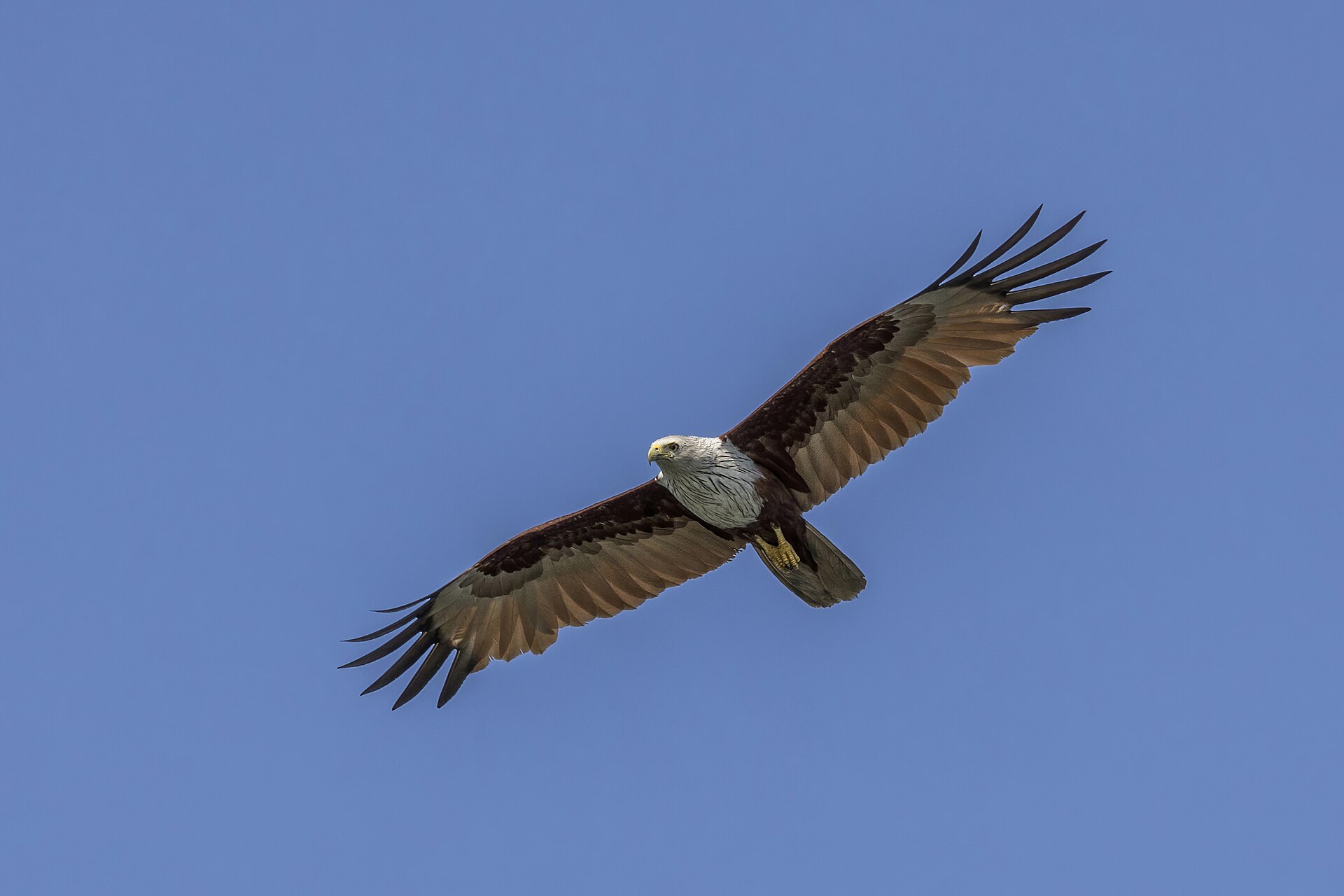
Langkawi is named for its eagles. The old reading of the name is "island of the reddish-brown eagle" — helang (eagle) plus kawi (a rust-brown colour) — and that bird is the brahminy kite, a rust-red raptor with a clean white head you'll see wheeling over the Kilim mangroves. There's a second, bigger one too: the white-bellied sea eagle. Both are easy to spot, and one boat trip built around them is worth a hard look.
The bird behind the name
The of the island's name is the brahminy kite (Haliastur indus) — chestnut-red body, white head and chest, a medium raptor that soars over coast and mangrove hunting fish and scraps. It's the one on the murals, the souvenirs, and in spirit on the giant statue at Kuah. Its larger cousin, the white-bellied sea eagle (Haliaeetus leucogaster), is grey-and-white, has a two-metre wingspan, and is the true "eagle" of the two.
| Brahminy kite | Rust-red body, white head — the 'reddish-brown eagle' of the island's name |
|---|---|
| White-bellied sea eagle | Bigger, grey-and-white, ~2 m wingspan — coasts and cliffs |
| Best seen | Over the Kilim mangroves and the northern karst coves |
| Best time | Morning, when they hunt the tide |
Where to see them
You barely have to try. On a Kilim mangrove boat the kites circle the karst cliffs all morning; along the north coast around Tanjung Rhu the sea eagles ride the thermals off the headlands; and the Eagle Square statue on the Kuah waterfront is the photo everyone takes stepping off the ferry. Bring the longest lens you have — they sit high on the cliffs between hunts.
The eagle-feeding problem — read this first
Many island-hopping and Kilim tours include "eagle feeding": the boat throws chicken skin and fat onto the water, dozens of kites swoop for the tourists' cameras, and it photographs brilliantly. It's also widely criticised. Feeding trains wild raptors to scavenge greasy handouts instead of hunting, concentrates unnaturally large numbers, and the fatty scraps aren't good for them; conservationists have pushed against it for years.
Watch out
If you'd rather not support it, ask your operator to skip the eagle feeding and just watch the kites hunt naturally — plenty of Kilim guides will, and the birds are more impressive doing what they actually do.
Tip
For the eagles at their best, take a morning Kilim mangrove tour and tell the guide you want wildlife-watching, not a feeding show.
Book a Kilim mangrove tourCheck availability