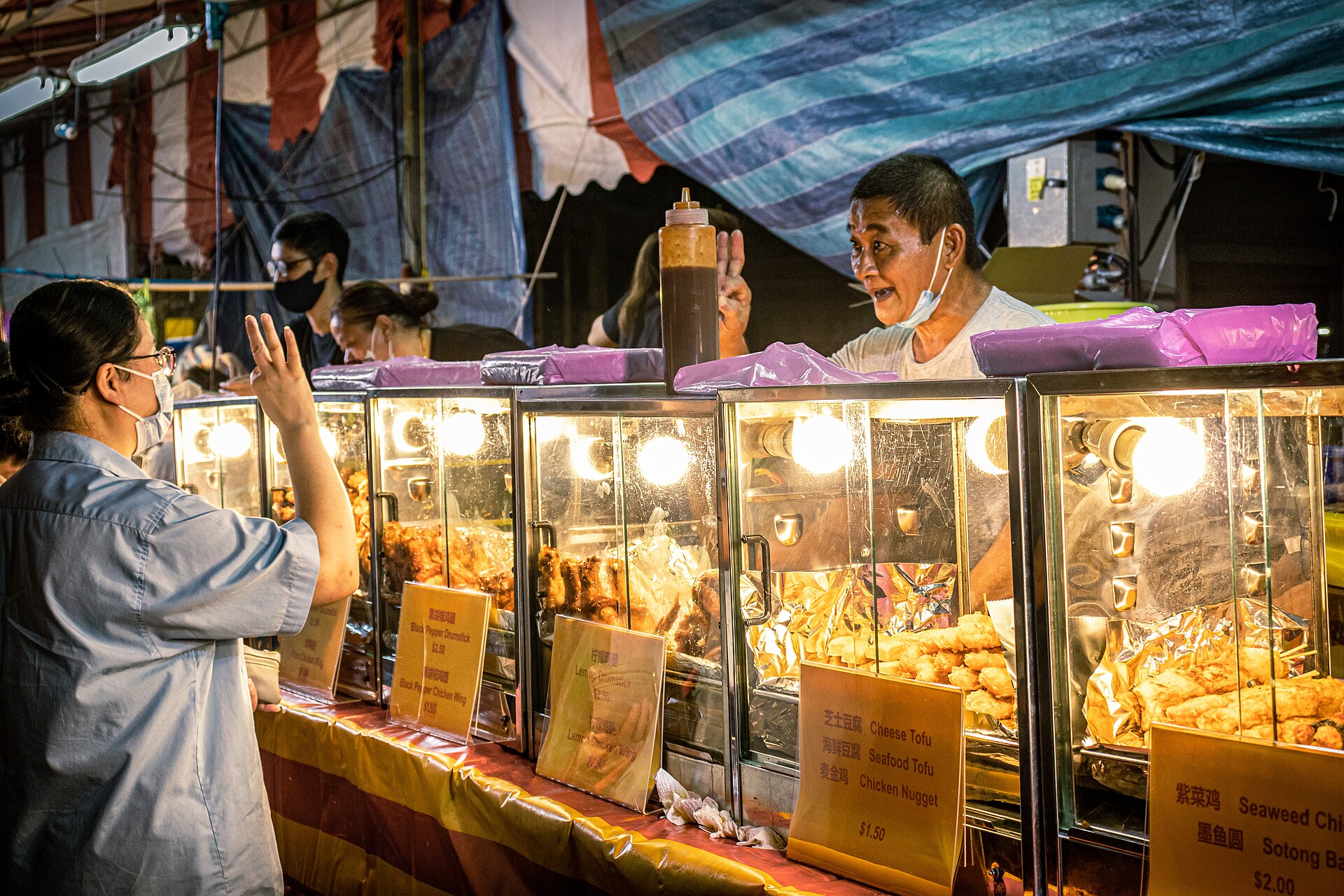
You don't need Malay in Langkawi — English is widely spoken, especially anywhere touristy. But a handful of words changes how you're treated: terima kasih (thank you), berapa? (how much?), sedap (delicious). Malay is written in the Latin alphabet and mostly reads how it looks, so a menu or a road sign is easier to decode than you'd fear. Here's the short list worth learning.
The ten that earn their keep
Learn these and you'll get a warmer table and a better price at the market. Malay has no tricky tones and largely one spelling-to-sound, so say it as it's written.
| Terima kasih | Thank you (reply: sama-sama) |
|---|---|
| Selamat pagi / petang | Good morning / afternoon |
| Berapa harga? | How much is it? |
| Sedap! | Delicious — the highest compliment at any stall |
| Tak nak / nak | Don't want / want |
| Air | Water (say 'eye-er') — also 'drink' on a menu |
| Tandas | Toilet — the word on the door |
| Boleh? | Can I? / Is it OK? — endlessly useful |
| Maaf | Sorry / excuse me |
| Jalan | Road / street (also 'to walk') |
Numbers, for the market and the taxi
You'll use these bargaining at a stall or reading a fixed taxi fare. Ringgit is RM and cents are sen; a price called as "dua puluh" is RM20.
| 1–5 | satu, dua, tiga, empat, lima |
|---|---|
| 6–10 | enam, tujuh, lapan, sembilan, sepuluh |
| 20 / 50 / 100 | dua puluh / lima puluh / seratus |
| Ringgit | The unit — 'lima ringgit' = RM5 |
Signs worth recognising
A few road and geopark words do a lot of work. Awas is caution or danger; dilarang means prohibited (dilarang masuk = no entry); keluar and masuk are exit and entrance. You already know pantai (beach) and pulau (island) from every signpost, and tandas for the toilet. Learn those six and you can read most of what matters on the road.
The Kedah accent you'll actually hear
Langkawi speaks a strong northern — soft, clipped, and different enough that even other Malaysians tease it. You'll notice the standard "-a" ending flatten to an "-aq" sound, and "hang" used for "you." You don't need to speak it; just know that when a stall auntie sounds like she's speaking a different language, she partly is. A plain "terima kasih" in reply lands perfectly.
Note
Malay borrows more from English than you'd expect — teksi, bas, tiket, polis, hospital all mean what they look like. When stuck, say the English word slowly; it's often the loanword.