Malaysia · Understand
Malay Phrases That Actually Help in Malaysia
English gets you through Malaysia fine — a few Malay words just make people warm up to you faster.
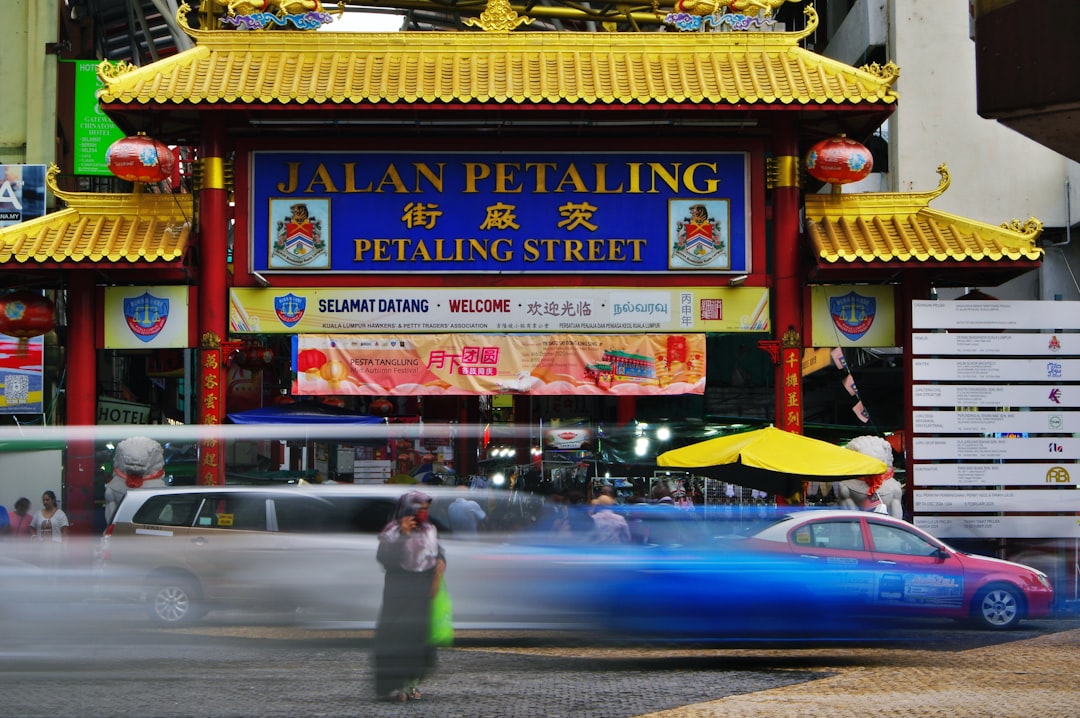
You will get by in Malaysia on English alone — it's an official language of business, signage and tourism, and in Kuala Lumpur, Penang or Langkawi you'll rarely be stuck. So this isn't a survival kit. It's a handful of Bahasa Malaysia words that make a shop owner smile, help you read a sign in a small town, and come in useful the further you get from the tourist strip.
Do you actually need Malay?
No — but a little goes further than in most countries you'll have visited. English is taught in schools and used everywhere in cities and tourism, so ordering food, booking a room or asking for directions rarely needs a word of Malay. Where it helps is in smaller towns and with older shopkeepers and taxi drivers, where a greeting or a "thank you" in their language changes the tone of the whole exchange — you go from tourist to guest.
Greetings and the basics
Malay greetings borrow from the time of day, and getting them right is an easy way to land warm.
- Selamat pagi (seh-LAH-mat PAH-gee) — good morning
- Selamat petang (seh-LAH-mat puh-TANG) — good afternoon/evening
- Selamat malam (seh-LAH-mat MAH-lam) — good night, used after dark
- Apa khabar? (AH-pa KAH-bar) — "how are you?", literally "what news?" — the standard how's-it-going
- Khabar baik (KAH-bar bike) — "I'm well", the reply
- Terima kasih (TREE-ma KAH-see, often run together as "trima-kasih") — thank you
- Sama-sama (SAH-ma SAH-ma) — you're welcome, literally "same to you"
Say terima kasih on the way out of any shop, stall or taxi and you'll notice the difference — it's the one word that gets used constantly and rewarded every time.
Please, sorry, and getting help
Tolong (TOH-long) covers both "please" and "help" depending on how you use it — said calmly it softens a request ("tolong, satu air" — please, one water), said urgently it's a call for help. Maaf (MAH-af) is sorry or excuse me, useful for squeezing past someone or for a small mistake. Ya (yah) is yes, tidak (TEE-dah, often shortened to tak) is no. For "I" and "you" in ordinary conversation, Malay uses saya (SAH-ya) for I/me and awak (AH-wak) for you — though in shops and with strangers, people often skip pronouns altogether or use titles instead, so don't worry about getting this perfectly formal.
Numbers and asking the price
Counting one to ten covers markets, taxis and ordering more than one of something: satu (one), dua (two), tiga (three), empat (four), lima (five), enam (six), tujuh (seven), lapan (eight), sembilan (nine), sepuluh (ten). The single most useful phrase for shopping or a trishaw ride is berapa harga? (buh-RAH-pa HAR-ga) — "how much does it cost?" — or just point and say berapa? on its own; people will understand.
Directions
Kiri (KEE-ree) is left, kanan (KAH-nan) is right, and lurus (LOO-roos) is straight ahead. Combined with pointing, these three get you through most navigation questions — useful with a trishaw driver, a security guard, or anyone you stop on the street who doesn't have much English.
Signs worth recognising
Malay is written in the Latin alphabet, so signage is legible even when you don't know the words — you're mostly just learning to recognise a handful of repeats: tandas is toilet, masuk and keluar are entrance and exit, buka and tutup are open and closed, and dilarang means forbidden (as in "dilarang merokok", no smoking). Once these four register, a lot of everyday signage in malls, transport stations and government buildings stops being a mystery.
Food words worth knowing
A few words make ordering food easier and let you signal what you actually want: makan (MAH-kan) means to eat, and doubles as a friendly "have you eaten?" greeting Malaysians use like small talk. Air (AH-eer) is water — pronounced nothing like the English word "air", it's two syllables. Sedap (suh-DAP) means delicious, and saying it to whoever cooked for you is always well received. Pedas (puh-DAS) means spicy — useful for asking a stall to go easy, or to brag that you can handle it. And halal is the same word in English and Malay: food prepared according to Islamic dietary law, and the term to look for on signage if it matters to you.
Accents change more than you'd expect
Standard Malay as taught in phrasebooks is closest to what you'll hear in Kuala Lumpur and on national TV, but regional accents shift the sound a lot. Kedah (mainland side of Langkawi) and Kelantan in particular have distinctive accents and local slang that can make even fluent Malay speakers from other states pause — don't be surprised if pronunciation sounds different from what you practised, or if locals switch between formal Malay and a regional dialect depending on who they're talking to.
Note
None of this is required to travel Malaysia comfortably — English carries you everywhere tourism happens. Treat these words as a way to be a better guest, not a checklist to memorise before you land.