Bali · Performing arts
Balinese Dance & Gamelan
The interlocking gong, the flickering eyes, the lion and the witch — a field guide to what you're actually watching, and where to watch it well.
Balinese dance is not ballet with different costumes. The music has no conductor and no melody in the way you expect one; the "orchestra" is a bronze machine of interlocking parts; and the most hypnotic moves happen in the dancer's eyes and fingers, not their feet. Knowing a handful of things before the lights go down turns a pretty tourist show into something you can actually read — and helps you tell the staged spectacle from the genuinely sacred.
The gamelan: one instrument played by twenty people
The sound under every Balinese dance is the — a tuned percussion orchestra of bronze gongs, metallophones, drums and cymbals. The thing to understand: the shimmering speed you hear is an illusion built by two players sharing one line. A fast passage is split between an "on-beat" and "off-beat" player who interlock so tightly it sounds like one impossibly quick musician. That technique is kotekan, and it's the engine of the whole style.
Most stage shows use gong kebyar, a bright, explosive 20th-century style (kebyar means "to burst into flame"). It sounds ancient; it was largely codified in the early 1900s. Two more things surprise first-timers: the bronze keys are deliberately tuned in shimmering pairs slightly out of phase, which gives the music its liquid, vibrating glow — and there's no written score and no conductor. The lead drummer steers tempo and cues by feel.
The dances you'll actually meet
You don't need the full catalogue. Five names cover almost everything a visitor sees:
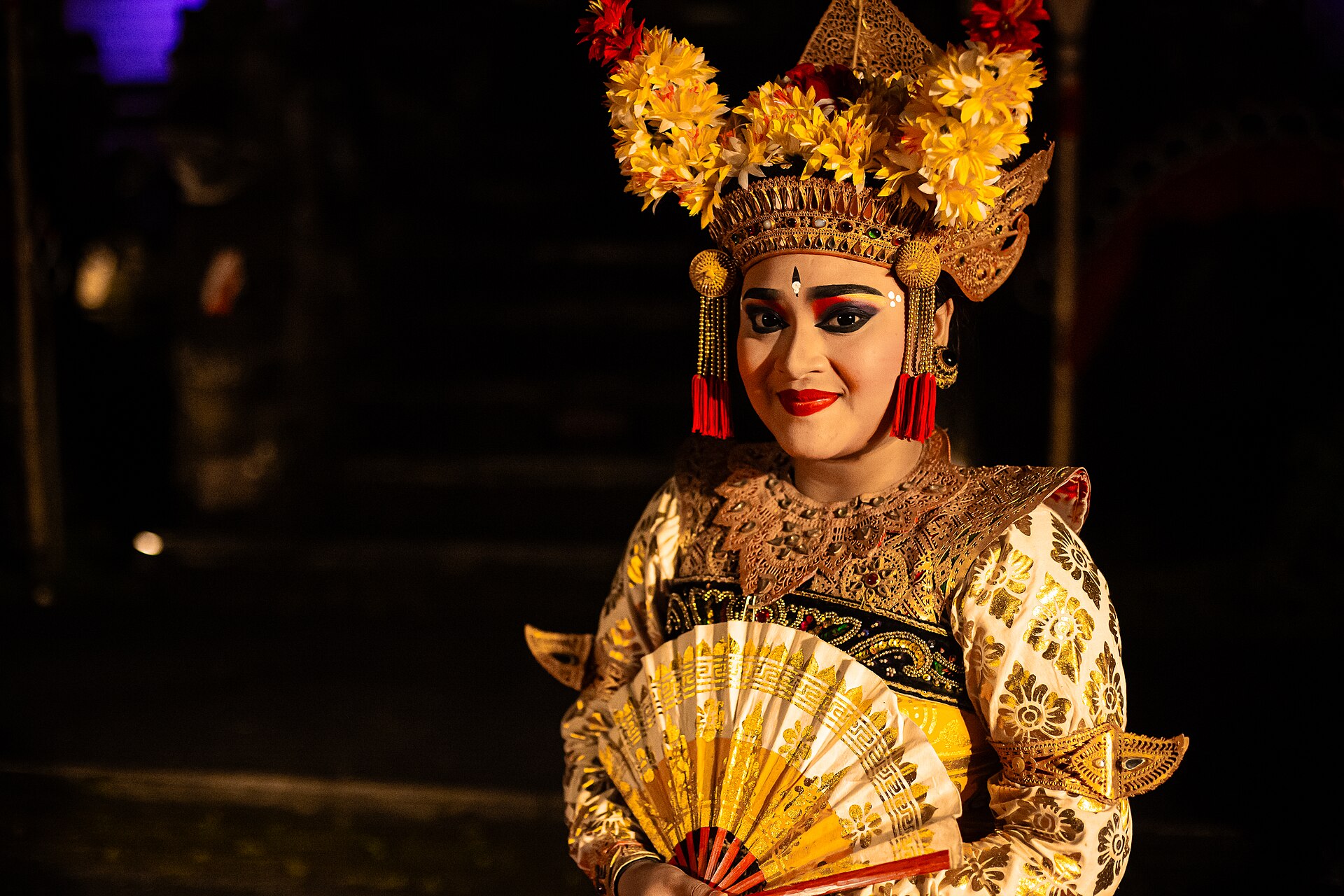
- — the refined court dance, usually young women in gilded headdresses, all darting eyes, flickering fingers and snapped-shut fans. This is the "postcard" Balinese dance and the one on most Ubud stages.
- Barong & Rangda — the island's great good-versus-evil drama. , a shaggy lion-like creature, is the protective spirit; , the fanged widow- witch, is his opposite. It's not a simple morality tale — the point is balance, not victory, and the story traditionally ends unresolved.
- — a solo or group warrior dance; twitchy, proud, trembling with martial tension. A showcase of pure male technique.
- Kecak — the famous "monkey chant," where a ring of men are the entire orchestra, voices only. Spectacular, and a 1930s creation for audiences, not an ancient temple rite — worth understanding properly before you go.
- Sanghyang — the genuinely sacred trance dances (a possessed girl, or the fire-treading sanghyang jaran). This is the real ritual root that the theatrical -derived shows borrow their power from.
Barong and Baris often stage an episode; Legong and the Kecak lean on the and Mahabharata epics. You will not follow the plot in detail, and that's fine — read the mood, the eyes and the drums.
Sacred vs staged — and why it matters
Here's the honest part. Most performances you'll pay to see are theatre, not worship — professionally staged for tourists, and there's nothing wrong with that. But Bali also runs a live ritual calendar where the same dances are performed as genuine offerings inside temple courtyards, sometimes with real trance. The difference isn't the choreography; it's the intent and the setting.
Practically: a ticketed evening show on a stage is fair game to photograph and enjoy. A dance happening inside a temple during a ceremony is not a performance for you — watch quietly from the back, dress properly (sarong and sash), never block a worshipper or a procession, and put the flash away. If you're unsure which you're looking at, assume the more respectful posture. (The belief system behind all of it is worth a few minutes of reading.)
Watch out
"Fire dance" and "trance" get oversold. Plenty of nightly shows advertise trance and a fire finale; most are staged, tightly controlled and perfectly safe to watch — which is fine, just don't expect a genuine spiritual event. And the fire climax at some shows (including Uluwatu's Kecak) is a separate ritual bolted on at the end, not the story's actual climax.
Where to see it, honestly
| Ubud stages | The easiest option — several venues (the Ubud Palace / Puri Saren courtyard is the atmospheric classic) run a different dance most nights: Legong, Barong, Kecak. Tickets typically ~100,000–150,000 IDR. |
|---|---|
| Batubulan Barong | A long-running morning Barong & Kris show near Denpasar, roughly 9:30am daily — convenient but famously touristy and coach-tour heavy. |
| Uluwatu Kecak | The cliff-top sunset Kecak — the most scenic and most crowded on the island. See the full Uluwatu guide. |
| The real thing | Temple (anniversary) ceremonies feature genuine ritual dance — ask your host or a local guide when and where one is on. Free, but you're a guest, not an audience. |
| Best value | An Ubud Palace show is the single best first taste — atmospheric setting, live gamelan, walkable, cheap. |
Tip
Want it sorted without the guesswork? Bundled cultural-show tickets and Ubud-area tours make the logistics (seats, transport, which venue is on tonight) someone else's problem.
Find a tour with pickupCheck availabilityHow to watch it well
Sit close enough to see the eyes and hands — the darting seledet eye-flick and the curled fingers carry more meaning than the footwork. Listen for the drum and the interlock, not a tune; there isn't a hummable melody, and once you stop waiting for one the music opens up. Don't clap for silence between sections the way you would at a concert — the flow is continuous. And give the gamelan a minute at the start: the bronze needs your ear to adjust before the shimmer really lands.
The newsletter
I'm writing Bali the way I wish someone had written it for me
The dances, the temples, the Bukit beaches — one honest, been-there guide at a time. Want the next one?