Bali · Food & drink
Balinese Food, and Where to Eat It
Bali's own cooking is smoky, chilli-hot, and built on one fierce spice paste — and it's mostly hiding in warungs, not the beach-club menus.
Most visitors leave Bali having eaten Italian, Australian brunch, and "Indonesian" nasi goreng — and almost no actual Balinese food. That's the real trap. Balinese cooking is a distinct, chilli-forward, deeply aromatic cuisine, and the best of it is smoky roast pig and slow-cooked duck served off a 's paper-lined plate, not plated in a beach club. Here's what to order, where, and what to be careful of.
The one thing that makes it taste Balinese
Almost every savoury dish here starts from base gede (also basa gede or ) — a pounded "complete spice paste" of shallots, garlic, chilli, ginger, galangal, turmeric, candlenut, shrimp paste and more, fried down slowly until it's dark and fragrant. It's why Balinese food tastes different from Javanese or Thai: earthier, more herbal, and often genuinely hot. If a "Balinese" dish tastes bland and sweet, it was probably tuned for tourists.
What to actually order
- — spit-roasted suckling pig, the belly stuffed with spice paste and cassava leaf, served with crackling skin, blood sausage, and rice. The island's signature feast dish. (Muslim travellers, note it's pork — not halal.)
- Bebek / ayam — duck or chicken packed with paste, wrapped and steamed then roasted for hours until it falls apart. The Gilimanuk-style version is fierce with chilli; order it if you like heat.
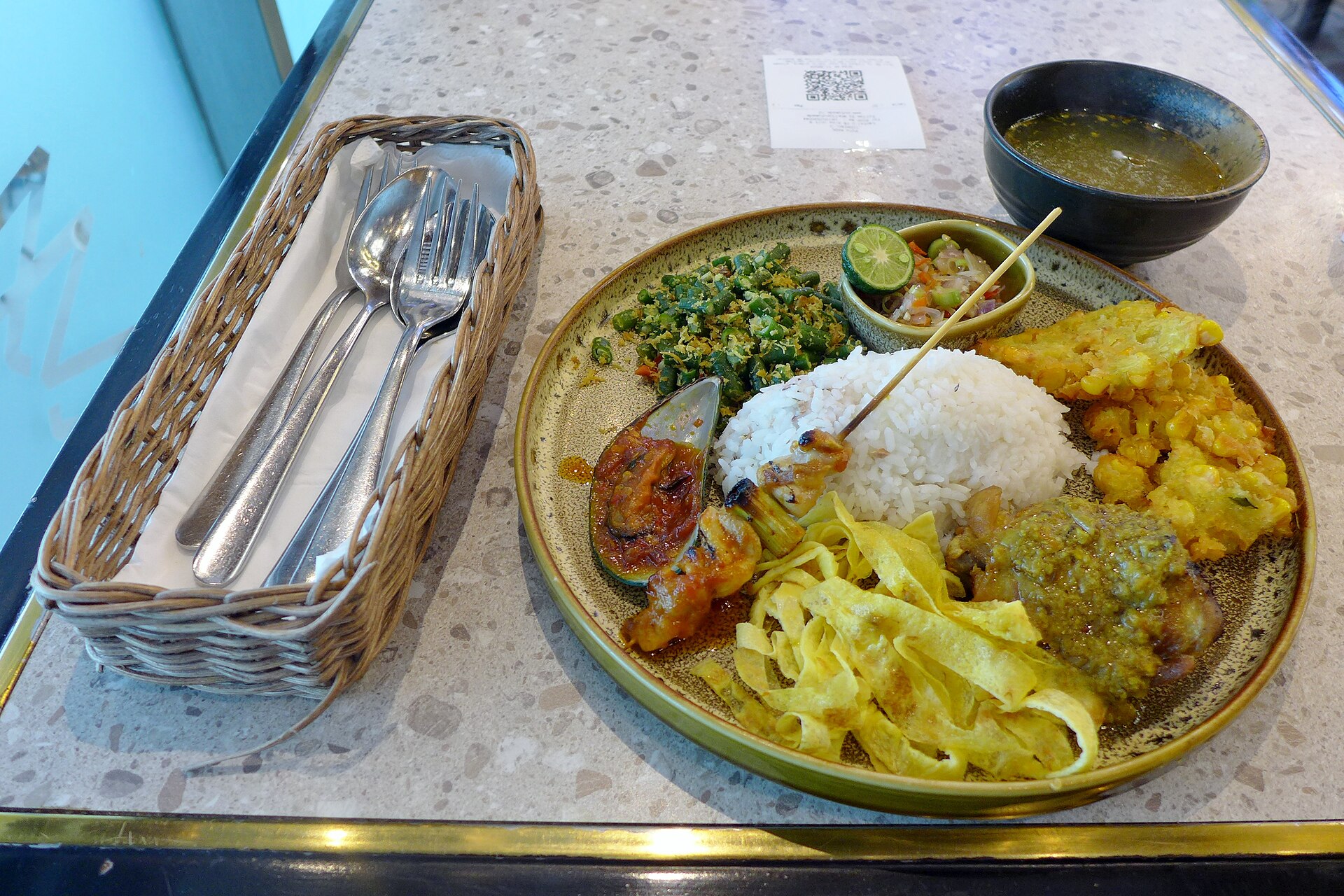
- — minced fish (or pork) blended with paste and coconut, moulded onto lemongrass or bamboo skewers and grilled. Bali's own satay, and far better than the generic peanut-sauce kind.
- — a ceremonial mix of chopped vegetables, grated coconut, spices and minced meat. Lawar merah ("red lawar") is traditionally bound with fresh raw blood — ask if you'd rather not, as most warungs also do a blood-free version.
- — the everyday hero: a scoop of rice ringed with small portions of whatever's cooked that day. Point at what you want. This is the single best way to taste ten things for very little money.
Warung, not restaurant
The honest rule: the best Balinese food is in warungs — small family-run eateries — and the food-court-looking ones with a hot display are often the best of all, because the turnover is high and everything's cooked that morning. A tourist-strip restaurant with a laminated menu of "Balinese specialities" is usually pricier, milder, and less fresh. Follow the crowd of locals eating lunch and you'll rarely go wrong.
The famous names are worth understanding rather than chasing. Ibu Oka in Ubud is the babi guling everyone's heard of — genuinely historic, but now a tour-bus institution where you can wait in a queue and pay a premium for a plate that locals get better and cheaper elsewhere. Have it if you want the story; don't treat it as the only option. For duck, Bebek Bengil (the "Dirty Duck") is the equivalent tourist landmark.
| Warung meal | A plate of nasi campur or babi guling typically ~25,000–60,000 IDR at a local warung; tourist restaurants run 2–4× that. |
|---|---|
| Best time | Go at lunch. Many babi guling and betutu warungs cook one batch a day and sell out by early afternoon. |
| Night markets | Pasar malam (e.g. Gianyar, Sanur, Kereneng in Denpasar) are cheap, lively, and the best place to graze — jaja (cakes), martabak, grilled corn, satay. |
| Coffee | Ordinary Balinese coffee is great and cheap. Skip kopi luwak — the "civet coffee" trade is largely a caged-animal tourist scam and the coffee isn't even good. |
Seafood, and the Jimbaran question
Grilled seafood on the beach at Jimbaran is a classic Bali evening, and it can be wonderful — but it's also where the priced-by-weight bill trap lives. Fish is sold per 100g, and unscrupulous places quietly upsell or weigh generously. Always confirm the price per 100g and the weight of your actual fish before it hits the grill, and get the total agreed up front. Do that and it's a lovely meal; skip it and the bill can quadruple your estimate.
Eating vegetarian (easier than you'd fear)
Bali is one of the better places in Indonesia to eat meat-free. Tempeh and tahu (tofu) are everywhere, often fried in sweet-spicy sambal. Gado-gado (vegetables with peanut sauce), urab/urap (vegetables with spiced grated coconut), and jukut vegetable dishes are staples. Two cautions, though: lawar and many sambals contain shrimp paste (terasi), and "vegetable" nasi campur is often dressed with a fish or meat stock — worth asking if you're strict.
Tip
The fastest way to skip the tourist-menu version of Bali is to let someone take you where the locals eat — a cooking class or a warung/street-food crawl walks you straight into the real thing, spice paste and all.
Find a Bali food tour or cooking classCheck availabilityThe two things that actually cause trouble
Watch out
Arak and methanol. Bali's home-distilled palm spirit, , is fine when it's made properly — but tourists are periodically poisoned, sometimes fatally, by methanol-contaminated bootleg arak and cheap "free-flow" cocktails. Buy branded, sealed spirits; be wary of unlabelled arak and suspiciously cheap cocktail deals. Warning signs after drinking — blurred vision, severe headache — need a doctor immediately, not sleep.
Bali belly. Most travellers get an upset stomach at some point. It's usually the ice, unwashed salad, and lukewarm buffet food, not the busy warung. Drink bottled or filtered water, and favour places with high turnover where food is cooked hot to order.
A quick map of the plate
Point at the busiest warung, start with nasi campur, and let one skewer stand for the whole idea — Bali's own satay.
Balinese food is inseparable from Balinese religion — much of it begins as an offering, and the big feast dishes appear because a ceremony called for a pig or a duck. If that thread interests you, the belief behind the offerings is a good next read; if you'd rather just eat well, point at the busiest warung and start with nasi campur.
The newsletter
I'm writing Bali the way I wish someone had written it for me
Where to eat, what to skip, and how not to get stung — one honest, been-there guide at a time. Want the next one?