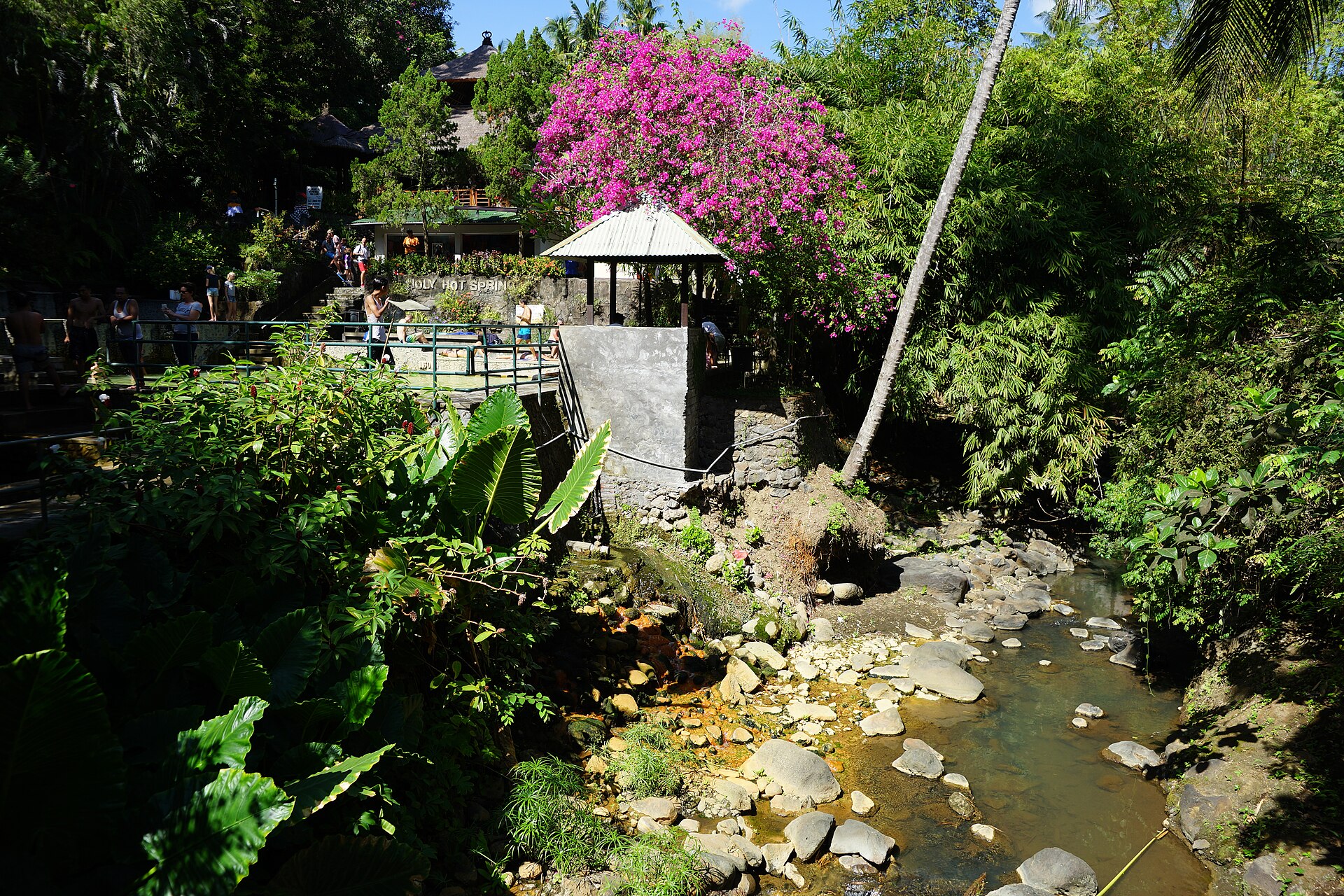
Air Panas is a set of warm sulphur pools in the jungle hills above Lovina, where water pours from carved stone naga (dragon) mouths into tiered bathing tanks. It's genuinely lovely and refreshingly low-key — but manage two things: the water is warm, not scalding-spa hot, and the site gets busy and shallow-crowded midday. Pair it with the Buddhist monastery ten minutes uphill and you have a calm, un-touristy half-day in the north.
What it actually is (and isn't)
These are natural mildly-sulphuric hot springs, channelled since the 1980s into three stacked pools of carved stone. The top two are for soaking; the lowest has tall spouts you stand under for a firm shoulder pummelling — the closest thing to a free massage in Bali.
Set your expectations right: the water sits around body temperature to pleasantly warm, not the near-boiling heat some people picture. On a hot day it can feel more tepid than thrilling. The appeal is the setting — mossy dragon carvings, jungle overhead, the faint eggy sulphur smell that's supposedly good for the skin — not a dramatic thermal experience. Come for the atmosphere and you won't be disappointed.
| Getting there | ~20 min south of Lovina, ~10 min from the coast road; roughly 2.5–3 hrs from South Bali over the mountains |
|---|---|
| Hours | Daily, roughly 08:30–17:30 (closed on ) |
| Entry | ~45,000 IDR for foreign adults (15,000 for Indonesian residents); small parking fee |
| Best time | Right at opening (before the tour vans) or late afternoon; weekdays over weekends |
| Bring | Swimwear (worn under, not changed poolside), a towel, flip-flops, cash |
Pool etiquette and the small stuff
A few things that trip people up. The sulphur will lightly stain and smell up light-coloured or white swimwear and silver jewellery — wear dark bathers and leave the good jewellery at the villa. There are paid lockers and changing rooms but they're basic, so travel light. The stone steps and pool edges get slippery — mind the algae.
The path in runs a short gauntlet of and souvenir stalls; there's a soft expectation you'll buy a drink or lunch, especially if you use their table or chairs to stash your bag. It's friendly, not aggressive — just know that "free" seating usually isn't.
Watch out
This is a communal soaking spot, not a private spa — it gets crowded and a little murky by midday when the tour buses from Lovina arrive, and the water is refreshed by flow, not filtration. If you want the pools calm and clearer, be there when the gate opens. Skip it entirely if you're expecting a pristine luxury thermal bath.
The monastery next door — the real reason to come up here
Ten minutes uphill sits Brahmavihara-Arama, Bali's largest Buddhist monastery (Bali is overwhelmingly Hindu, which makes this a genuine oddity). Founded in 1970, it's a working Theravada meditation centre — quiet, terraced gardens, gilded shrines, and a miniature replica of Java's Borobudur with its own stupas and bell-shaped domes.
It's peaceful and almost always uncrowded, and it costs little or nothing (a donation is expected). Because it's an active monastery, dress and behaviour matter more than at a tourist temple: cover shoulders and knees, a sarong is required (loaned at the entrance), keep your voice down, and don't wander into meditation areas or photograph practitioners without asking.
Doing the two together is the move. Most people visit the monastery first (calmer, and you'll want to be dry and modestly dressed), then reward themselves with the hot springs after. Total time on-site for both: about two to three hours.
Fitting it into a north-coast day
Banjar makes most sense as part of a loop, not a standalone pilgrimage from the south. If you're basing in Lovina — the mellow black-sand town 20 minutes north — it's an easy morning. Coming over the mountains from Ubud or the south, string it together with the Munduk waterfalls and lake viewpoints, or the big drop at Sekumpul, to justify the drive. See the North Bali overview for how the region links up.
Tip
The honest logistics answer for the north is a car and driver for the day — the sites are spread out, public transport barely exists, and a driver lets you chain the springs, the monastery and a waterfall without stress or scooter-in-the-mountains risk.
Book a guided day tripCheck availabilitySo, is it worth it?
If you're already in the north — yes, easily, especially paired with the monastery. It's a pretty, cheap, un-flashy couple of hours. As a dedicated day trip from Seminyak or Ubud — probably not on its own; the drive is long and the springs alone won't fill it. Bundle it into a broader north-coast day and it earns its place.
The newsletter
I'm writing Bali the way I wish someone had written it for me
The quiet north — Lovina, Munduk, the waterfalls and springs — one been-there guide at a time. Want the next one?