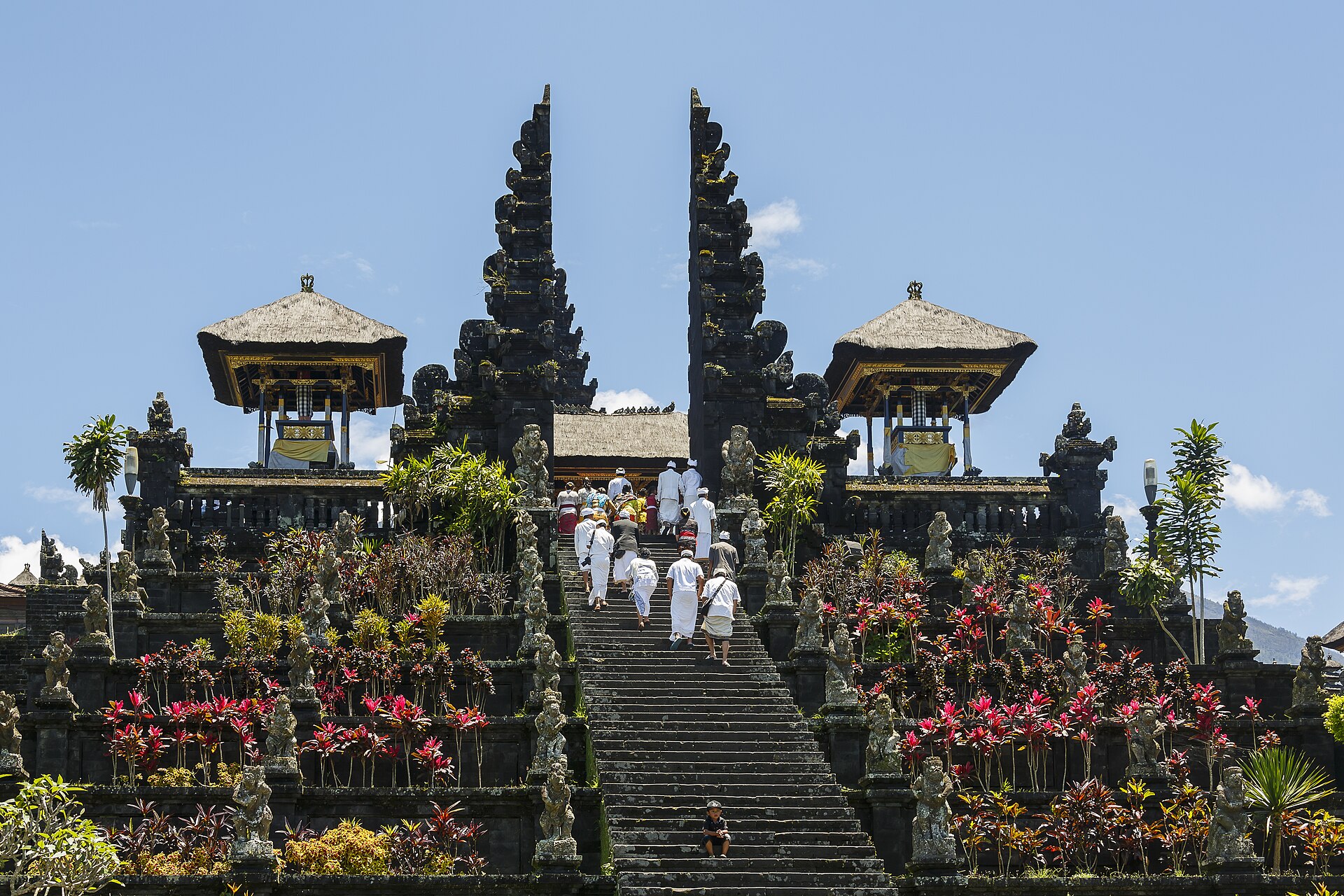
Besakih is Bali's largest and holiest temple — a complex of more than 20 temples terraced up the flank of Mount Agung. It's genuinely spectacular. It's also the site the island is most notorious for hassling visitors, and while a recent overhaul cleaned up a lot of that, the single thing that decides whether you enjoy Besakih is knowing how the guide-and-donation game works before you arrive.
What actually trips people up
For years Besakih had the worst reputation of any temple in Bali: fake "compulsory guides" who attached themselves to you at the car park, invented dress-code problems, walked you a few metres and then demanded a large "donation," plus a guestbook showing suspiciously enormous sums other tourists had supposedly given. Some visitors left feeling they'd been robbed at the holiest place on the island.
The good news: a big provincial redevelopment (opened around 2023) added a visitor centre, a fixed-price ticket, and electric buggies up to the temple, which cut a lot of the freelance-guide racket out of the picture. The honest summary is that Besakih is much better than its old reputation — but the old tricks haven't vanished entirely, so go in knowing the rules.
Watch out
You do not need a guide, and no "donation" is compulsory. A guide inside the complex is genuinely useful (much of the site is closed to non-worshippers and a good guide explains what you're seeing), but it's optional and the price should be agreed before you start walking. Ignore anyone who intercepts you in the car park claiming you must hire them or pay a temple donation on top of your ticket.
Is it worth the trip?
Honestly: yes, but manage expectations. Besakih is a working religious site, not an attraction built for sightseeing, and as a non-Hindu you can't enter the inner courtyards — you view the great stairways, the split gates and the black towers from the paths and terraces around them. The magic is the setting: dozens of temples marching up the mountainside with Agung looming behind, and, if the cloud clears, one of the most dramatic temple panoramas in Indonesia.
It's a 1.5–2 hour drive from South Bali or Ubud, so it rarely justifies a trip on its own. Pair it with the rest of East Bali — Sidemen's rice valleys, Tirta Gangga's water gardens, or a Mount Agung sunrise — and it's an easy yes. As a standalone half-day from Seminyak, it's a lot of car time for a place you photograph rather than enter.
The 1963 eruption — the story worth knowing
The detail that gives Besakih its aura: in 1963 Mount Agung erupted catastrophically, killing well over a thousand people and devastating the surrounding villages. The lava flows missed the temple by metres, sparing it while destroying so much around it. Many Balinese read this as a sign of the mountain's power and the site's sanctity. Whatever you make of it, standing at Besakih with Agung directly above you, the story lands.
Getting there and getting in
| Where | Slopes of Mount Agung, East Bali. ~1.5–2h from Ubud, ~2–2.5h from South Bali (Seminyak/Kuta). |
|---|---|
| Ticket | 150,000 IDR for a foreign adult (80,000 for domestic visitors) — a fixed combined ticket that bundles the sarong-and-sash loan, a local guide, and the one-way electric buggy up. Buy at the official visitor centre, keep the receipt. |
| Buggy | An electric shuttle runs from the visitor centre up to the temple entrance — the ride up is bundled into the ticket; the return trip is a small extra fee (or a 10–15 min walk down). |
| Hours | Roughly 08:00–17:00 daily; ceremonies can close areas without notice. |
| Dress | Sarong and sash required; usually included with the ticket or loaned at the gate. Don't pay a tout separately for one. |
| Best time | Arrive at opening. Agung and the temples cloud over by late morning, and afternoon rain is common in wet season (Nov–Mar). |
Tip
The easiest way to do Besakih is with a driver who knows it — you skip the car-park hustle, get a real explanation of the site, and can chain it with Sidemen or Tirta Gangga into one clean East Bali day instead of two long solo drives.
Book an East Bali day trip with driverCheck availabilityPractical honesty checklist
- Go early. The mountain is clearest in the morning; by noon it's often just grey cloud and you've lost the whole point of the view.
- Agree any guide fee up front, in writing on your phone if you like, and know that it's optional.
- Carry cash in smaller notes so you're never handing over a 100k because you "don't have change" at a donation table.
- It's a place of worship — dress modestly, don't climb the shrines, and don't photograph praying worshippers up close. Ceremony days are visually incredible but the temple gets very busy and some paths close.
Go deeper
The newsletter
I'm writing Bali the way I wish someone had written it for me
East Bali, the Nusa islands, the Bukit beaches — one honest, been-there guide at a time. Want the next one?