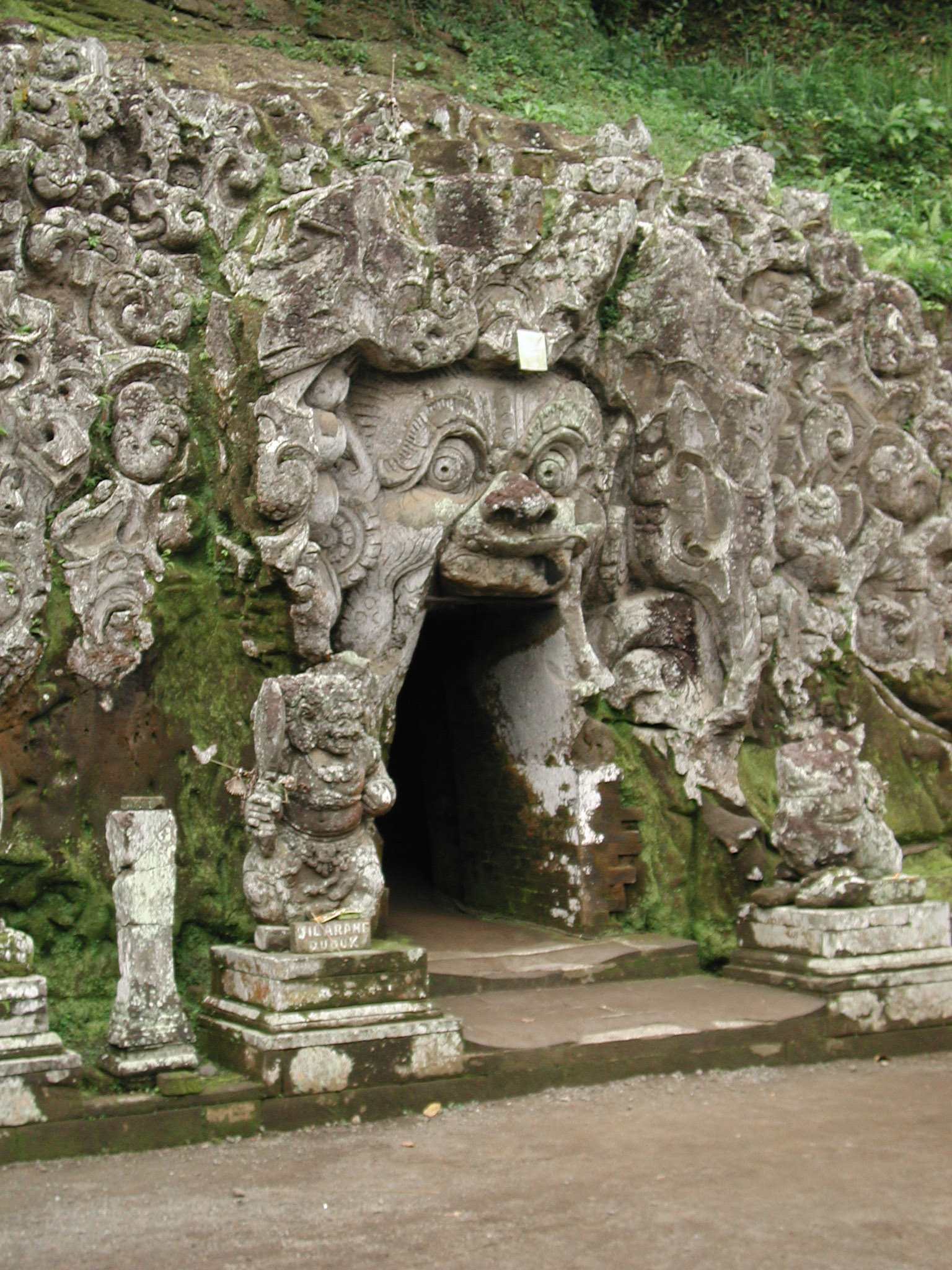
Goa Gajah is a real 9th-to-11th-century antiquity: a menacing carved cave mouth and an old bathing pool tucked into a river valley just southeast of Ubud. It's genuinely atmospheric — and genuinely small. The honest headline: this is a 30–45-minute stop, not a half-day, and it works best bundled with Tirta Empul or the rice terraces rather than as a destination in its own right.
What you're actually looking at
The star is the cave entrance — a mass of swirling stone carved into what most people read as a demon's or elephant's gaping mouth, its lips forming the door you duck through. Inside, the cave is short, dark and T-shaped, with a few niches holding a lingga-yoni and a statue of Ganesha. Don't expect a cavern — it's a small meditation cell, and you're back out in two minutes.
The "Elephant Cave" name is a bit of a red herring: there are no wild elephants in Bali and never were. The name most likely comes from the nearby Petanu River (once called Elephant River) or a garbled link to the Ganesha figure inside — not from any elephant carving at the mouth, whatever a guide tells you.
The better half of the site is actually outside the cave: a rectangular bathing pool, excavated only in the 1950s, fed by stone figures pouring water from urns. It's a Hindu-Buddhist mix — a reminder that this valley was a spiritual crossroads long before the Bali you see now settled its shape.
Is it worth it?
Qualified yes. If you're already circling Ubud's ancient-sites loop, Goa Gajah is an easy, cheap, shady stop with real history and a striking photo. If you'd have to make a special trip for it alone, skip it — the cave interior underwhelms almost everyone, and the crowds at the cave mouth mean you queue for your photo in high season. Manage expectations and you'll enjoy it; arrive expecting a Cambodia-scale ruin and you'll feel shortchanged.
Go early (open to ~09:30) or late afternoon to beat both the tour buses and the midday heat in the valley.
The bit that trips people up
Watch out
The sarong "rental" hustle. A sarong is required, and admission normally includes one to borrow at the entrance — so you shouldn't pay extra. Vendors and freelance "guides" near the car park may try to sell or rent you one, or attach themselves as a paid guide you didn't ask for. Politely decline and use the free loaner at the ticket booth. Same energy applies to the pushy stalls you walk through on the way out.
Getting there and making the day work
Goa Gajah is about 10–15 minutes by car southeast of central Ubud — too far to walk comfortably, easy by scooter or driver. Because the visit is so short, the smart move is to chain it with nearby sites on one loop.
| Time needed | 30–45 minutes is plenty |
|---|---|
| Hours | 08:00–18:00 daily |
| Entry | 50,000 IDR adult, 25,000 IDR children; sarong included |
| Pair it with | Tirta Empul (holy-spring bathing) and Tegallalang rice terraces — a classic Ubud half-day |
| The walk | Steps down into the valley, then a longer set back up — mild but real; not step-free |
Tip
Easiest as part of a loop. Since Goa Gajah is a quick stop, most people see it on an Ubud day tour or with a private driver who waits while you wander — no parking hassle, no negotiating a guide at the gate, and the sites strung together in a sensible order.
Book a guided day tripCheck availabilityBeyond the cave
Most visitors stop at the cave and pool and leave — but a path leads down into the river valley below, past crumbling shrines, carved rock faces and moss-covered Buddhist relics scattered in the greenery. It's quiet, often empty, and the most rewarding ten minutes on the site if your knees are up for the steps.
Go deeper
The newsletter
I'm writing Bali the way I wish someone had written it for me
Ubud's ancient sites, the rice terraces, the temples that are actually worth your time — one honest, been-there guide at a time. Want the next one?