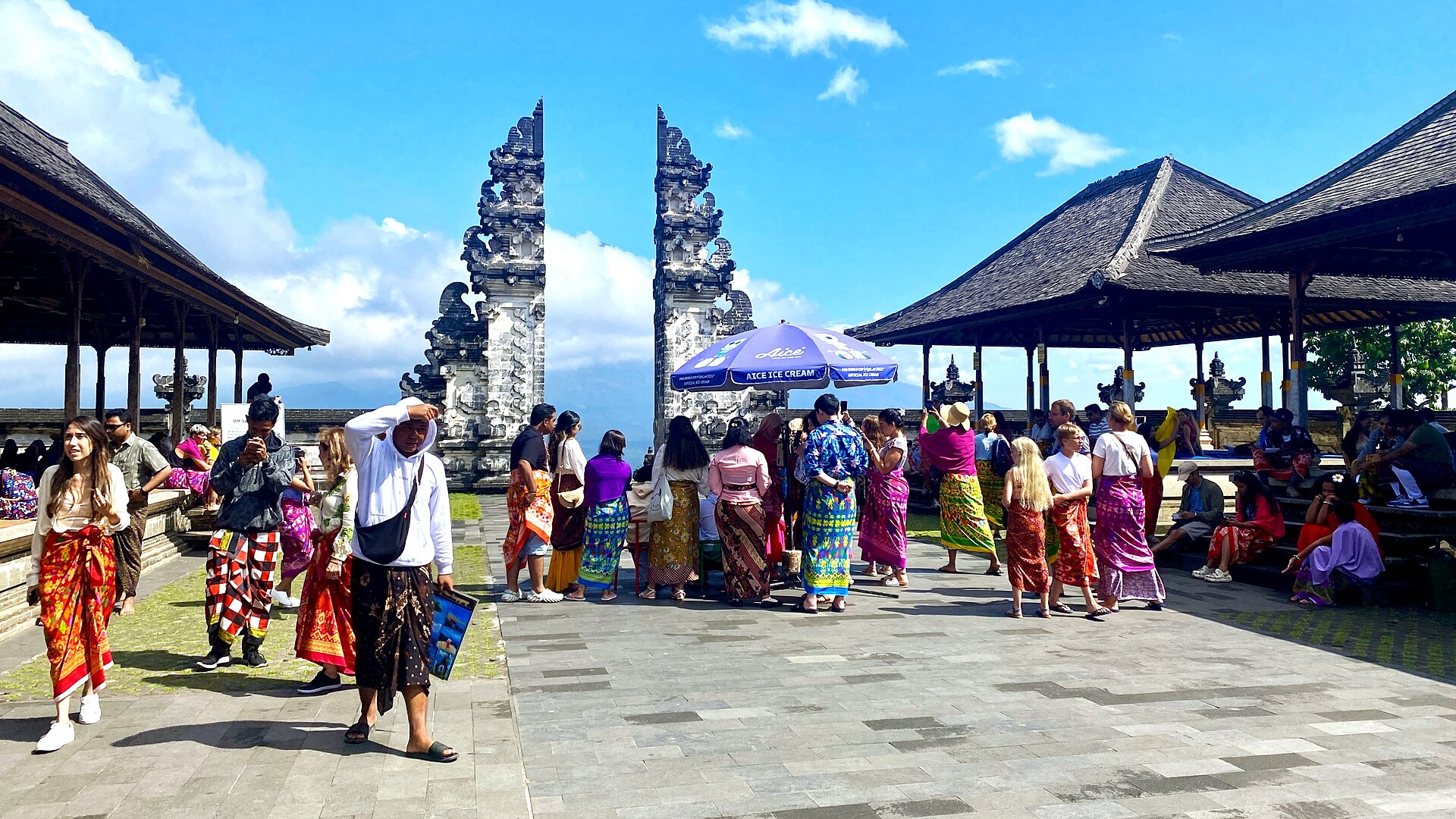
The "Gates of Heaven" photo is a trick — that glassy lake mirroring the sky beneath your feet is a small piece of mirror held under a phone by the on-site photographer. Knowing that up front saves the disappointment most people feel when they arrive, join a queue that can run one to three hours, and realise the famous shot is a staged production line. Lempuyang can still be worth it — but for the mountain, the climb, and the temple, not the illusion.
The photo, decoded
Penataran Agung is the lowest temple in the Lempuyang complex, and its split gate — a — happens to frame Mount Agung, Bali's highest and holiest volcano, dead centre. That's the real magic and it's genuinely beautiful. The viral "reflection," though, is not water. A temple photographer lies on the ground, holds a phone with a square of mirror or glass clipped below the lens, and shoots up at you. It looks like you're standing between the gate and a still mountain lake. It's clever, it's harmless, and it is completely manufactured.
Watch out
There is a "free" versus paid photo grey zone here that trips people up. The gate shot is taken by the temple's own photographers using their mirror rig, and a tip or donation is expected — figure a small amount per group, cash. You cannot realistically get the signature reflection yourself without their setup. Framing your own honest photo of the gate and Agung is free; the mirror illusion is not.
The queue is the real story
At peak times you take a numbered ticket and wait your turn for a few seconds in front of the gate. In dry-season mornings that line has been known to stretch to two or three hours for a single photo. The pragmatic move: arrive at opening, before the day-tour buses roll in from the south, or accept that you're spending half a morning on one image. Agung also tends to clear in the early morning and cloud over by midday, so early is better for the view regardless of the crowd.
| Getting there | Roughly 2–2.5 hours by car from Ubud, 2.5–3 from the south (Kuta/Seminyak). No reliable public transport — you need a driver or scooter. |
|---|---|
| Opening / best time | From around 06:00–07:00; go at opening for clear Agung and a short queue. |
| Entry & donation | A set entrance fee now applies (recently on the order of IDR 55,000 per person; some operators bundle sarong, shuttle, and the gate photo into a higher all-in price), plus sarong rental if not included and cash for the gate-photo tip. Bring small IDR notes. |
| Shuttle | A short paid ojek/shuttle often runs from the car park up to the first temple. |
The climb almost nobody does
Here's what gets lost in the Instagram noise: "Lempuyang" is a whole complex of temples climbing the mountainside, and the gate is only the bottom one. The true sanctuary, Pura Lempuyang Luhur, sits far above — one of Bali's , the six great directional temples that guard the island. Reaching it means climbing well over a thousand steps through forest, past dragon-flanked stairways and troops of macaques, for an hour or more each way. Almost no day-tripper does it, which is exactly why it's the better half of the visit — quiet, cool, and genuinely sacred.
Is it worth it? An honest verdict
If you come only for the mirror photo, you may leave feeling you queued an hour for a gimmick — and you'd have a point. But treat Lempuyang as a mountain temple with a famous view and a real pilgrimage above it, pair it with Tirta Gangga or Besakih nearby, and East Bali's slower rhythm rewards the long drive. Go early, keep your expectations honest about the "lake," and consider climbing past the crowds.
Tip
Do it as a driver-led day. Lempuyang is far, the roads are winding, and pairing it with Besakih, Tirta Gangga, or Mount Agung views makes the distance pay off. A private day tour lets you hit the gate at opening before the buses and skip the parking and shuttle logistics.
Book a guided day tripCheck availabilityEtiquette that matters here
This is an active place of worship, not a set. Sarong and sash required (rented at the gate), cover your shoulders, and don't climb on or pose irreverently on the shrines. Menstruating women are traditionally asked not to enter — part of the purity system, not a judgement. If a ceremony is underway, the gate photo line pauses; worshippers come first. Read the fuller picture in our guide to Balinese Hinduism.
The newsletter
I'm writing Bali the way I wish someone had written it for me
East Bali, the water palaces, the temples worth the drive — one honest, been-there guide at a time. Want the next one?