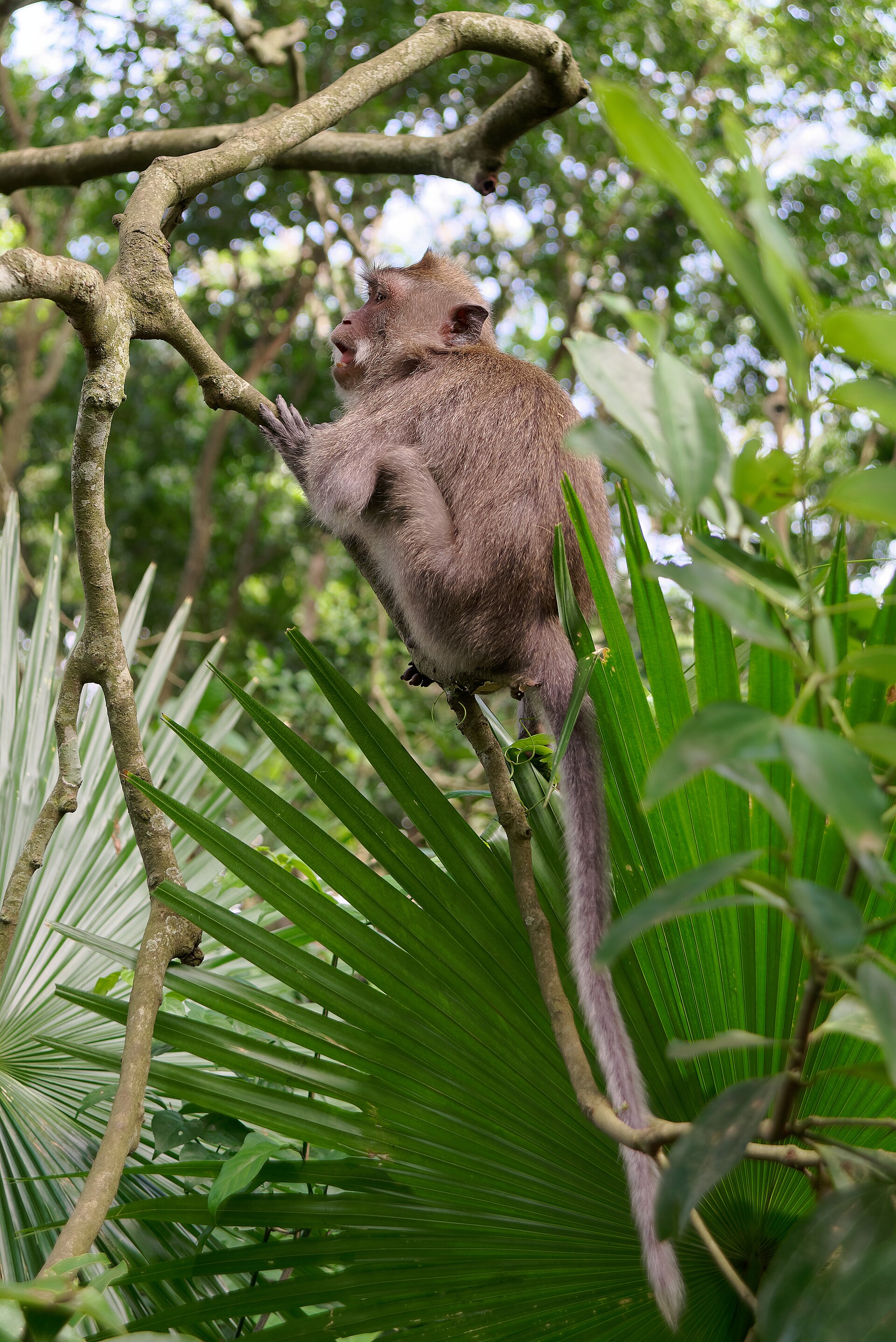
The Sacred Monkey Forest is a genuine nature reserve in the middle of Ubud — three old temples, a towering nutmeg canopy, and well over 1,000 long-tailed macaques who run the place. It's an easy, worthwhile visit if you go in with your guard up. The single thing that ruins people's morning is treating the monkeys like a petting zoo. They are wild, food-motivated, and very good at their job.
What it actually is
Not a zoo and not a photo-op set up for tourists: the Mandala Suci Wenara Wana is a conservation and research site owned by the village of Padangtegal, with real biologists studying the macaque troops. Inside a compact patch of old-growth forest you'll find shaded stone paths, a stream and mossy bridges, giant strangler figs, and three 14th-century temples — the main Dalem Agung (a temple of the dead), plus bathing and cremation temples down by the ravine. The inner temple courtyards are closed to non-worshippers, so you admire the carved gates and dripping green stone from the path. Budget 45 minutes to a bit over an hour.
The monkey playbook (read this before the gate)
This is the whole ballgame. The macaques are habituated to humans and will climb on you, and some will go through an unattended bag in seconds. Handlers () patrol, but you are your own first line of defence.
What to actually do
Carry nothing loose. Zip your phone away, take sunglasses off your head, and stow water bottles, snacks, loose hats and dangling jewellery. A monkey can't grab what it can't see.
Do not bring food in, and don't buy bananas to feed them. Feeding is what makes them bold and aggressive with the next visitor. Even a wrapper or a plastic bag in your hand reads as food.
No eye contact, no smiling with teeth. A direct stare and bared teeth are both threats in macaque body language. If one climbs on you, stay calm, look away, and let a pawang handle it — don't shake it off or grab back.
If one takes something, don't chase or tug — you'll get bitten. Find a handler.
Watch out
Rabies is endemic in Bali, and bites and scratches do happen here. Any break in the skin counts as exposure: wash it hard with soap and running water for ~15 minutes and get to a clinic for the post-exposure vaccine promptly — same day. Travel insurance that covers rabies PEP is genuinely worth having for Bali.
The honest crowd picture
It gets busy, and the monkeys are busiest and boldest in the morning and late afternoon feeding windows, which is also when the tour groups arrive. If you want the forest quieter and the light better, go right at opening or in the lull around midday. It's central Ubud, so it pairs naturally with the Campuhan Ridge walk or a wander down Jalan Monkey Forest afterwards. Is it worth it? Yes — if you like the idea of a genuine forest-and-temple reserve. If you're only there to hold a monkey, skip it; that's exactly the behaviour that gets people bitten.
Tip
Entry is a straightforward walk-up ticket, but if you'd rather fold the forest into a guided Ubud day with transport sorted, a local operator handles the logistics.
Find a tour with pickupCheck availabilityPractical notes
| Hours | ~09:00–18:00 daily; last entry ~17:00 |
|---|---|
| Entry | ~80,000 IDR adult, ~60,000 child; cash preferred |
| Getting there | South end of Jalan Monkey Forest, walkable from central Ubud; parking at the north or south gate |
| Best time | Right at opening for fewer people and calmer monkeys; avoid the feeding-time crush |
| Wear | Closed shoes, a bag that fully zips, no loose straps; modest cover for the temple areas |
| Accessibility | Paved but with steps and ravine stairs; humid and slippery after rain |
A look inside
Go deeper
The newsletter
I'm writing Bali the way I wish someone had written it for me
Ubud's temples, terraces and ridge walks — one honest, been-there guide at a time. Want the next one?