Bali · Wealth & inequality
The Two Balis
Villa-Bali and village-Bali sit a few kilometres apart on wildly different incomes — here's the split, without the guilt trip.
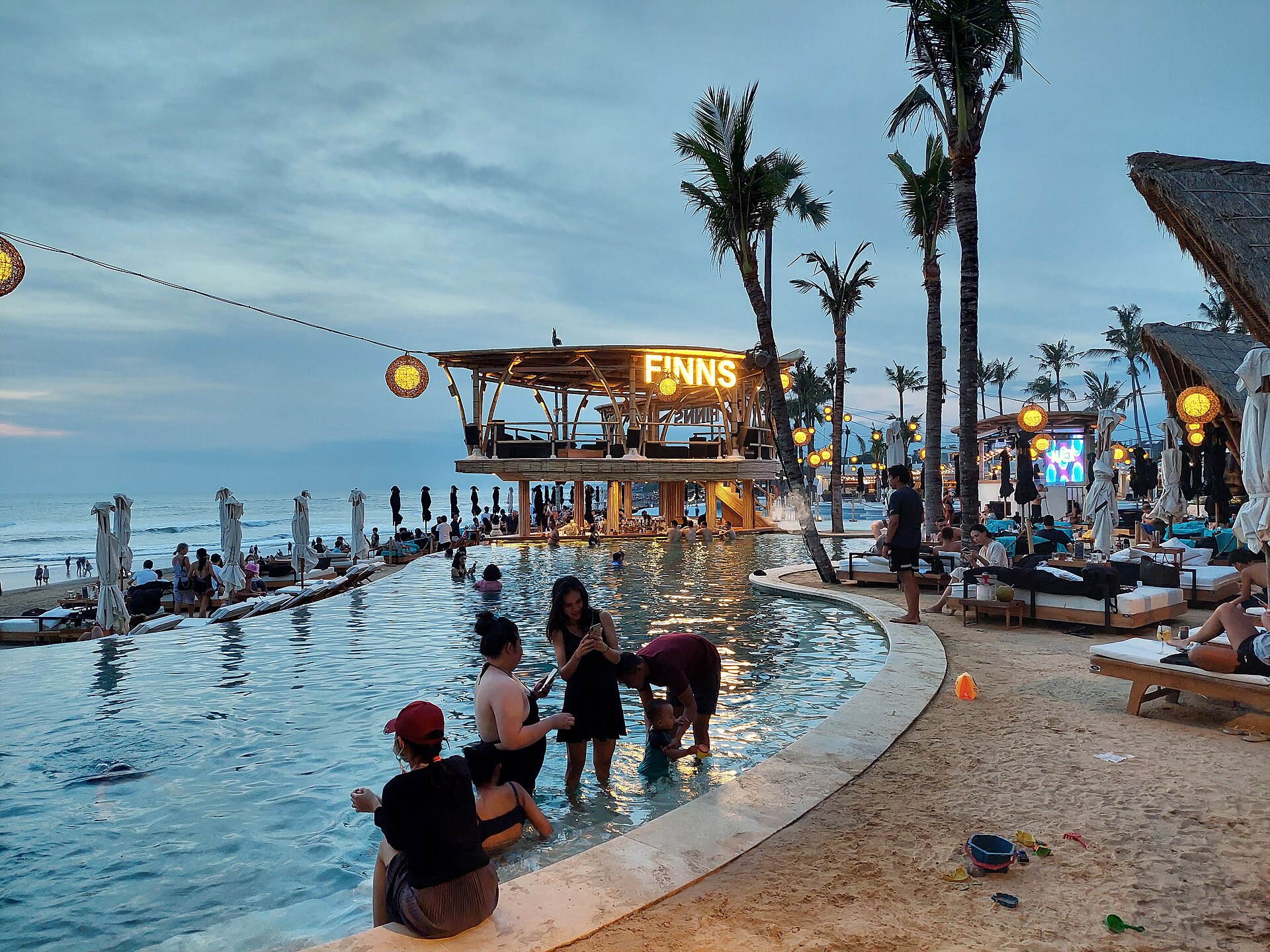
There are two Balis on the same small island, and they sit a few kilometres apart. One has infinity pools, beach clubs and a fifteen-dollar brunch; the other grows the rice and cleans the pools and rides a scooter home to a village where that same fifteen dollars is a serious sum. Almost all of the tourism money pools in the south — the airport, Kuta, Seminyak, Canggu, Nusa Dua, Denpasar and Ubud — while the east and north hold much of the scenery and much less of the income. Knowing which Bali you're standing in, and spending accordingly, is the single most useful thing in this guide.
The south holds the money
Look at a map of where tourists actually go and it's a wedge across the bottom of the island. Badung — which owns the airport, Kuta, Seminyak, Canggu and Nusa Dua — plus the capital Denpasar and Gianyar (which holds Ubud) take in the large majority of the island's tourism spending. Badung in particular collects the lion's share of hotel and restaurant tax, so much of it that the province redistributes a slice to poorer regencies to spread it around.
That concentration is the whole story in one fact. The waves, temples and beach clubs you flew for are packed into a strip you could drive across in an afternoon, and the money stays largely where the tourists sleep.
Village Bali is right next door
Drive an hour out of the south — into Karangasem in the east, Buleleng along the north coast, Bangli up in the hills — and the register changes completely. This is farming and fishing Bali: rice terraces watered by a thousand-year-old cooperative system, salt pans on black-sand beaches, clove and coffee on the slopes. These regencies are markedly poorer than the south, and it isn't because they're some undiscovered scenery waiting for you. It's the flip side of the same coin — the investment, the hotels and the wages went south, and stayed there.
I want to be careful here, because it's easy to turn someone's home into a diorama. The east and north aren't "authentic Bali" for your camera; they're where a lot of people live ordinary, unglamorous, often stretched lives. But if you go with that respect, they're also where a rupiah you spend does the most good.
Who actually runs the resorts
The two Balis are joined by the people who move between them every day. The staff who make the south run — housekeepers, drivers, cooks, spa therapists, security, the warung cook two doors down from the beach club — very often commute in from cheaper neighbourhoods, or come from the poorer regencies for the season and send money home. Their village supports the resort, and the resort wage supports the village.
That's the honest shape of tourism here: it funds an enormous number of livelihoods, and it does it on a steep two-tier pricing system. You'll feel the two tiers within a day. A tourist-facing menu is priced in what are effectively dollars; the the staff eat at is priced in the local economy, and the gap between them is roughly the gap between the two Balis. A holiday that feels cheap to you is still expensive measured against a local monthly wage.
Note
The two-tier thing isn't a scam to be angry about — it's what happens when a global-income crowd and a local-income economy share the same street. Pay the tourist price at tourist places without resentment, and go looking for the local price at local places because that's where your money reaches a family directly.
Land, water, and who gets priced out
Under all of this is land. A foreigner can't own Balinese land freehold, so the villa economy runs on long leaseholds and nominee arrangements — a local name on the title, a foreign owner behind it. Whatever you think of that, its effect is plain: land values near the tourist south have rocketed, and locals — the farmers whose families held that rice land for generations — increasingly can't afford to buy near home, or take the one-time windfall of a sale and watch the ground become someone's pool.
Water is the quieter version of the same squeeze. Big hotels, pools and gardens draw heavily on groundwater, and the subak that irrigate the rice terraces are competing for it. The pressure isn't evenly shared — again it lands hardest where development is densest, and where the people who farm have the least leverage.
Holding both truths
It would be easy to end on a wag of the finger, and I won't. Tourism is not the villain here — it pays for schools, scooters, ceremonies and a way out of subsistence farming for a lot of families, and most Balinese I know want more of it, not less. And at the same time it strains water, land, traffic and the fabric of village life, and the newer wave of long-stay remote workers adds real pressure to housing and rents in exactly the neighbourhoods locals live in. Both of those are true at once. You don't have to resolve the tension; you just have to see it clearly enough to spend well inside it.
What you can actually do
None of this asks you to have a worse trip — mostly it asks you to spread the same money a little wider than the villa strip.
- Spend some of it outside the south. Give the east or north a few nights, not a day trip. Your money goes further for the people who receive it, and the roads and reefs are quieter anyway.
- Eat at warungs and buy from markets. Not as a sacrifice — the food is often better — but because that spend lands directly on a local family instead of an imported supply chain.
- Hire local guides and drivers directly, and tip fairly. Book the guy from the village for the trek or the boat rather than the big agency, and tip in a way that actually matters against a local wage.
- Remember it's a home, not a backdrop. The rice terrace is someone's field, the temple is in use, the village isn't a set. Ask before photographing people, dress for temples, and drive like your niece lives on that lane.
- If you're staying long, notice your footprint. Long-stay rentals in local neighbourhoods are part of the housing squeeze — go in aware of it, and put money back into the local economy where you can.
Tip
The simplest single move: base at least part of your trip beyond the south. It's better value, less crowded, and it's where your spending does the most for people who live here.
Find a local guide or day tripCheck availabilityThe newsletter
I'm writing Bali the way I wish someone had written it for me
Where the money goes, which villages your spending actually reaches, the honest trade-offs behind the postcard — one been-there guide at a time. Want the next one?