Region · Central Bali
Ubud
Rice terraces, temple springs, monkeys and gamelan — Bali's cultural core, wrapped in more traffic and marketing than anyone tells you. Here's the honest version.
Heads up: some links here are affiliate links — book through them and I may earn a small commission at no extra cost to you. It never changes what I recommend.
Short version
Go — but not for the reasons Instagram sold you. Ubud is genuinely Bali's cultural heart: gamelan and dance most nights, working temples, art villages, and green river valleys that start where the pavement ends. What trips people up is the gap between the idea of Ubud — serene, spiritual, empty rice fields — and the reality: central Ubud is congested, loud with scooters, and heavily monetised. The good stuff is real; you just have to get up early and walk a little to reach it.
The "Eat Pray Love" thing, honestly
Ubud's modern fame owes a lot to one 2006 memoir and its 2010 film. That fame built an entire economy of yoga studios, raw-vegan cafés, sound baths, and "healing" retreats — some excellent, many just premium prices wrapped in wellness language. None of it is a scam exactly; it's just marketing, and it's thick on the ground. Treat "spiritual," "authentic," and "hidden gem" on a menu or signboard as pricing signals, not descriptions. The authentic Ubud — the one with offerings on every threshold and a cremation procession that stops traffic — is free and all around you.
Watch out
The traffic is the real enemy of your day. Central Ubud's one-way lanes gridlock from mid-morning, and a 10 km hop to Tegallalang can eat 45 minutes each way by midday. Front-load everything: temples and terraces at dawn, town and cafés in the sluggish middle of the day, dance at night.
What Ubud actually is
Ubud isn't one village — it's a cluster of them that grew together around the royal palace, landscapes of paddy and river gorge, and a long tradition of court art. That art heritage is the thing that makes it different from beach Bali: painting in Peliatan and Penestanan, woodcarving in Mas, silver in Celuk, and a genuinely nightly calendar of and dance. Base yourself here and you're within 30 minutes of temples, springs, terraces and jungle — traffic permitting.
The essential guides
The sights people actually come for, each with its own honest write-up:
- Ubud Monkey Forest — a real forest-temple sanctuary, not a petting zoo. The macaques are bold; know the rules before you walk in.
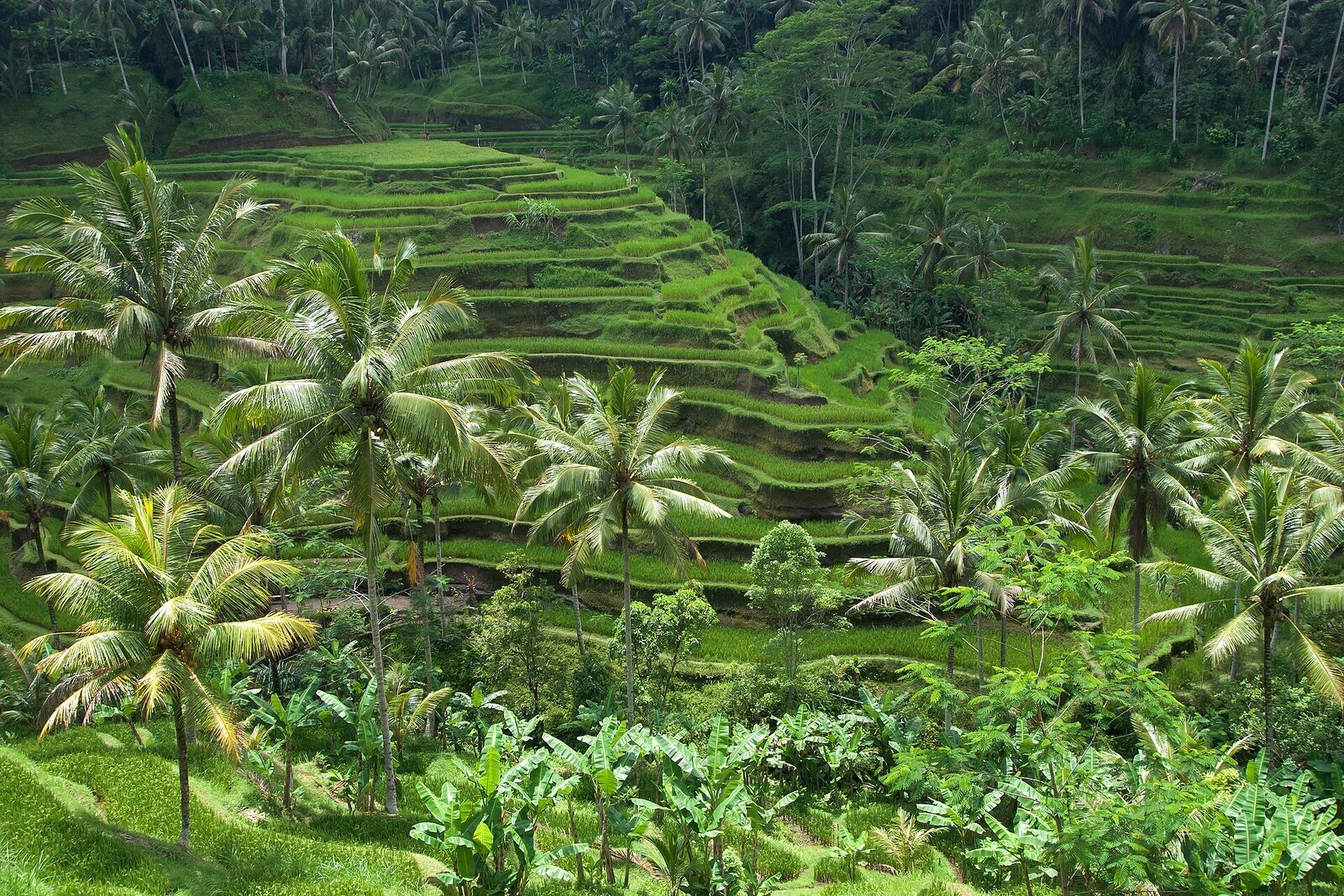
- Tegallalang Rice Terraces — the postcard view, plus the reality of paid "donation" checkpoints and a valley of Instagram swings.
- Tirta Empul — the holy-spring purification temple (); moving if done respectfully, a queue if not.
- Goa Gajah — the 9th–11th-century "Elephant Cave," small but atmospheric.
- Campuhan Ridge Walk — the best free hour in Ubud, if you beat the heat and the crowd.
Where to base yourself
| Central Ubud | Walkable to the palace, market and dance stages — but noisiest and most trafficked. Best if you want to leave the scooter parked. |
|---|---|
| Penestanan / Sayan | West of the centre, quieter, valley views and the walk to Campuhan; short ride into town. |
| Nyuh Kuning / south | Just past the Monkey Forest — leafy, calmer, still walkable to the middle. |
| Getting around | Walk the centre; hire a driver for a day of outlying sights (far cheaper booked as a set trip than hop by hop). Grab/Gojek work but face pickup friction near the market. |
The dance is the thing to book
Whatever else you do, catch one evening dance performance — , , or a Kecak — usually at the palace or a nearby temple courtyard, most nights around 7:30pm. It's the least touristy-feeling "tourist" thing in Ubud: live gamelan, real dancers, and tickets that fund the local troupes.
Tip
Do the outlying sights as one driver day. Tegallalang, Tirta Empul and a waterfall in a single loop beats fighting traffic and haggling ride-by-ride — and a good driver knows when each place is least mobbed.
Book a guided day tripCheck availabilityWhen to go, and when not to
Mornings are non-negotiable: the terraces, ridge and temples are calm and cool before about 9am and a scrum by 10:30. The dry season (roughly May–September) is reliable but busiest; the shoulder months trade a little rain for far thinner crowds. Avoid trying to "do" Ubud as a day trip from the south — the drive alone is 1.5–2 hours each way, and you'll spend the good early hours in a car.
The markets, up close
Go deeper
The newsletter
I'm writing Bali the way I wish someone had written it for me
Ubud, the Bukit beaches, Nusa Penida — one honest, been-there guide at a time. Want the next one?