Home › Kuala Lumpur › Jalan Alor
Kuala Lumpur · Bukit Bintang
Jalan Alor
One street, hundreds of plastic stools, and the closest thing KL has to a citywide dinner table.
Heads up: some links here are affiliate links — book through them and I may earn a small commission at no extra cost to you. It never changes what I recommend.
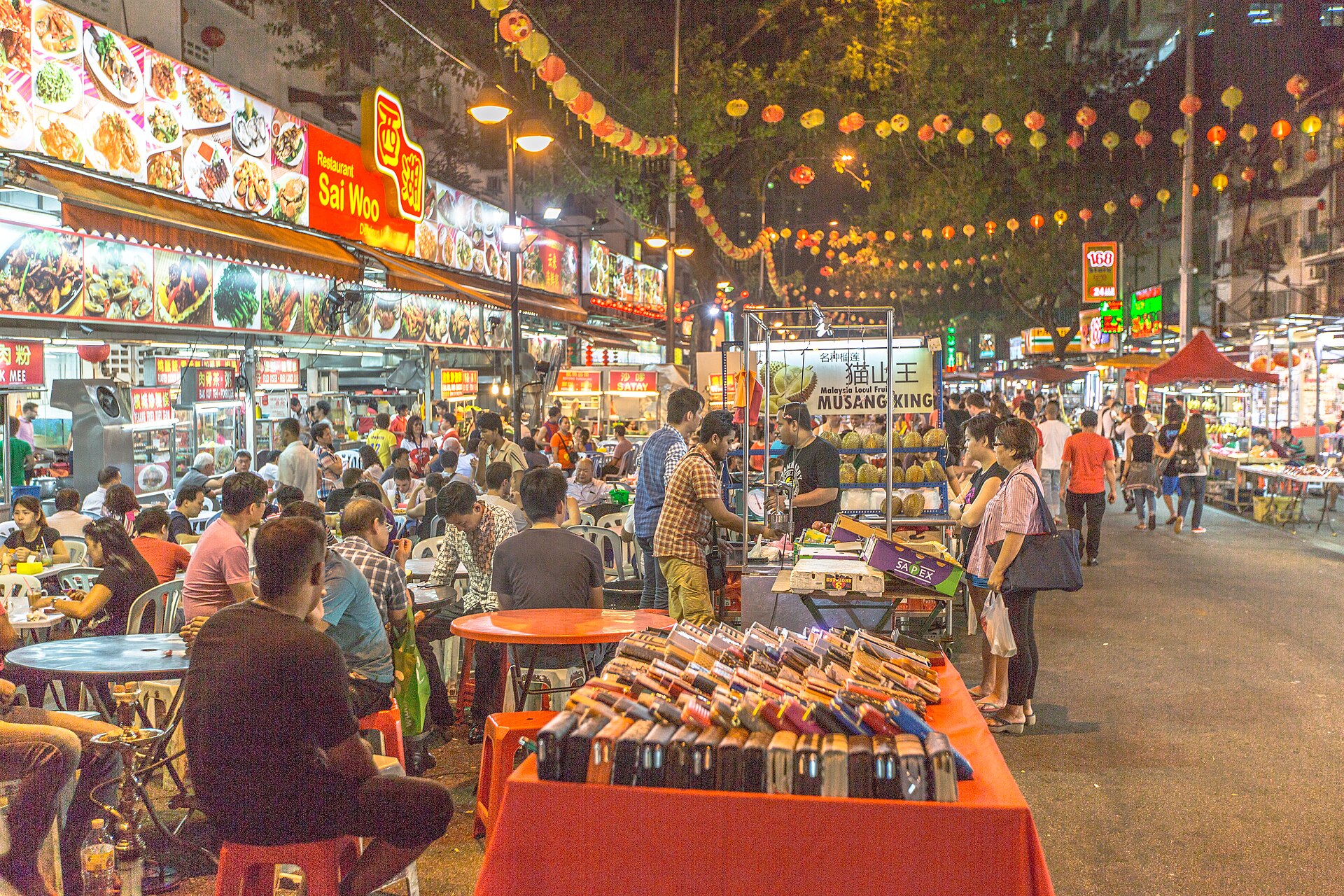
Jalan Alor is a single closed-off street in Bukit Bintang that turns into an open-air dining room every evening — stall after stall of grills, woks and drink carts, tables spilling into the road, plastic stools filled until the early hours. It's the street I send people to when they want one loud, easy, delicious night in KL, and it's touristy enough that you should know how to order before you sit down. This guide is that.
When does Jalan Alor come alive?
Stalls start setting up mid-to-late afternoon, but the street doesn't feel like "Jalan Alor" until the sun's down. From around 7pm the lights and grills are all going, and it stays properly busy until well past midnight — some kitchens keep serving toward 3am, later on weekends. Go before 6:30pm and you'll have the place mostly to yourself, which has its own appeal if you hate queuing.
| Comes alive | From ~7pm; daytime is quiet, most stalls not yet open |
|---|---|
| Winds down | Many stalls run to 1–3am, later on weekends |
| Busiest | Friday–Sunday nights and any public holiday |
| Quietest window | Weeknight, 6–7pm — tables free, grills still warming up |
How the street is laid out
It's one road, roughly 200 metres of it, closed to through traffic in the evening and lined on both sides with stalls, most with their own cluster of tables set out under awnings or straight on the tarmac. There's no single entrance or exit — you can wander in from either end (off Jalan Bukit Bintang at one end, toward Changkat at the other) and just walk until something looks good. Menus are in English and Chinese at most stalls, with laminated photo boards out front, so you're rarely guessing blind.
The street runs mostly Chinese-run seafood-and-grill stalls with a handful of other kitchens mixed in — it isn't a single cuisine, closer to a long buffet of independent operators sharing the same stretch of road and the same set of tables.
How ordering and pricing actually works
This is the part that trips people up. Tables aren't tied to one kitchen — you sit down, and runners from different stalls will come to take your order for their dish, so one table can end up with grilled satay from one stall, fried rice from another, and a coconut from a drink cart, all billed separately at the end. Most dishes are priced per plate or per skewer, printed or shown on a board, and that's genuinely fixed. Seafood is the exception: crab, prawns and some fish are priced by weight, and that's where a night can quietly get expensive if you don't ask first.
Watch out
Before anything gets weighed and cooked, ask the exact price per 100g or per kg, confirm the total weight they're charging you for, and get a rough total before you say yes. This single question is the difference between a fair bill and a bad one.
Drinks work as their own small economy: separate carts and stalls sell fresh coconuts, sugarcane juice, and fruit juices, and you order and pay them directly rather than through your food stall. Nobody minds you mixing and matching — that's how the street is designed to be eaten.
What to order
Think of this as the shape of a Jalan Alor plate, not a specific stall to find — the kitchens rotate and reputations shift faster than any list can keep up with. For the wider context on these dishes — where they come from, how the country's food traditions overlap — see Malaysian food.
Grilled satay — skewered chicken or beef off a charcoal grill, dipped in peanut sauce, sold by the stick and cheap enough to order a dozen without thinking about it. Char kway teow — wok-fried flat noodles with prawns, egg and Chinese sausage, done fast over high heat; a stall with visible flame and a queue is usually doing it right. Chicken wings — a genuine Jalan Alor specialty, marinated and char-grilled, often the dish people specifically walk the street looking for. BBQ seafood — stingray in banana leaf with sambal, whole fish, prawns and crab off the grill or wok, the most visually dramatic order on the street and the one to confirm pricing on first. Cut fruit — carts selling fresh watermelon, pineapple and dragon fruit by the bag, a good palate-cleanser between savoury rounds. Coconut and sugarcane drinks — served straight from the fruit or pressed to order, the standard way to cool down between plates.
| Pay per dish | Most items priced individually and billed by the stall that made them |
|---|---|
| Seafood by weight | Confirm the per-100g/per-kg rate before it's cooked |
| Cash helps | Smaller stalls and drink carts often prefer cash; card acceptance is patchy |
Is Jalan Alor a tourist trap?
Partly, honestly — it's on every KL itinerary, some stalls have leaned into that with pushier touts and creeping prices, and you can eat worse for more if you're not paying attention. But the food underneath the hype is genuinely good, locals still eat here, and the trap is avoidable rather than built-in.
The real issues are specific, not general: a few stalls quote seafood prices loosely and hope you don't ask; touts at the busiest corners wave photo menus at anyone who slows down; and the most photographed stalls aren't always the best-cooked. None of that makes the street bad — it just means you shouldn't switch your brain off the moment you sit down.
How to eat well and not overpay: confirm any weighed seafood price before it's cooked, skip the stall with someone physically pulling you toward a table, and look for where the plastic stools are full of a mixed local and tourist crowd rather than tour groups exclusively — that's usually the kitchen worth trusting. A short walk past two or three stalls before you sit costs nothing and tells you a lot.
Vegetarian, vegan and halal
Jalan Alor is mostly Chinese-run and mostly not — pork and pork-derived ingredients (lard, char siu) turn up across the street, and alcohol is served openly at several stalls. If you keep halal, ask directly rather than guessing from the outside of a stall, or head toward the -style options at the edges of Bukit Bintang instead. Vegetarians will find fried noodle and rice dishes, tofu, and the fruit and juice carts easily enough, but few stalls cook meat-free by default — say so clearly when you order, since stock and sauces are shared across dishes.
Getting there
Jalan Alor sits inside Bukit Bintang, a couple of minutes' walk from both rail stations serving the district.
| Monorail | Bukit Bintang station, on the KL Monorail line, then a short walk in |
|---|---|
| MRT | Bukit Bintang station on the Kajang Line, similar walking distance |
| From Changkat | One block over — cross from the bar strip and you're on Jalan Alor inside a couple of minutes on foot |
| Grab | drop-off is slow here on weekend nights — the surrounding streets bunch up; walking the last stretch is often faster |
Budget the evening in and pay stall by stall as you go — there's no single bill for the table, and that's part of what makes the street work.