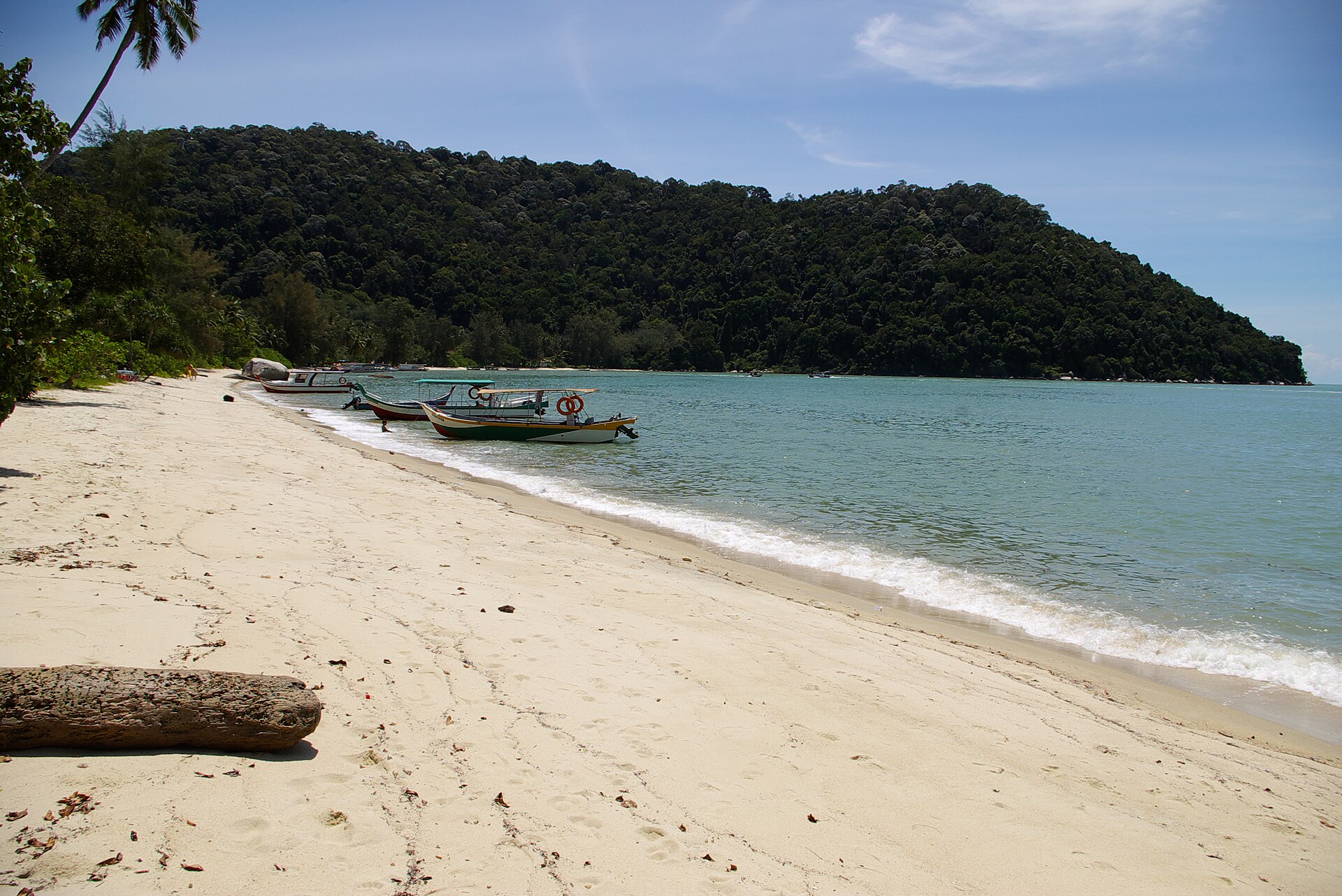
Penang National Park sits at Teluk Bahang, past the last of the Batu Ferringhi hotels, and it's small enough that people underrate it — it's often billed as the smallest national park in the world, a few square kilometres of rainforest, mangrove and beach squeezed onto the island's northwest tip. Entry is free once you've registered at the gate , and the honest steer is this: you're choosing between a hot jungle walk and a hired boat, and most people are happier picking the boat.
Getting in — and the two ways in
The park has one entrance, at Teluk Bahang, and from there you've got two genuinely different ways to reach the beaches inside it. You register at the gate — bring ID, it's logged so the park knows who's still inside — and then either walk in on the marked trails or pay a boatman at the jetty just past the gate to run you round by sea.
Entry is free with registration at the gate, the walk to Monkey Beach takes roughly 45–60 minutes on marked trail, and the longer haul to Turtle Beach is closer to 2–3 hours; a boat, hired at the jetty just past the gate, is priced per boat rather than per person. The trails are the cheaper, slower option, and they're real jungle walking — tree roots, humidity that doesn't let up under the canopy, and mud that gets worse after rain, not a paved park path. The boat is the easy option: fifteen minutes or so and you're on the sand without the sweat, which is why most visitors who aren't there specifically to hike end up taking it. I'd only walk in if you actually want the forest, not just the beach at the end of it.
Monkey Beach and the lighthouse
Monkey Beach (Teluk Duyung) is the first stop most people make, whether by trail or boat, and it's named honestly — long-tailed macaques live around the beach and the tree line behind it, and they are wild animals, not park mascots. Don't feed them and don't leave bags open on the sand; they've learned that visitors carry food, and an unattended bag is fair game to a macaque that's figured that out.
A separate trail climbs from near the beach up to Muka Head lighthouse, still operational, marking the island's northwestern point. The climb is short but steep, and the payoff is the view back down the coast rather than the lighthouse itself, which you can't go inside.
Watch out
The macaques at Monkey Beach are genuinely wild, not habituated pets — keep food zipped away, don't hand-feed them for a photo, and give them space if they come close. Bites happen when people don't.
Turtle Beach, the sanctuary, and the meromictic lake
Turtle Beach (Pantai Kerachut) is further round and quieter, and it's where the park's two more unusual features sit side by side. A turtle conservation station on the beach protects nesting sites for green and hawksbill turtles — both endangered — relocating eggs to a hatchery and releasing hatchlings under supervision rather than leaving nests exposed on an open beach. Sightings of nesting turtles or a release aren't guaranteed; it depends entirely on season and luck, and I wouldn't build a trip around timing one, since it's seasonal and depends entirely on active nesting.
Behind the beach sits Malaysia's only meromictic lake — a lake where distinct layers of fresh and salt water sit stacked without mixing, rare enough globally that it's one of the reasons this small park has scientific weight beyond its size. Both the sanctuary and the lake are conservation sites, not swimming spots: no touching turtles or hatchlings, no litter, and stick to the marked boardwalk around the lake rather than the shoreline mud. The sanctuary works with green and hawksbill turtles, both endangered.
The canopy walkway
A separate, shorter trail near the entrance leads to a canopy walkway — a suspended bridge strung between trees at height, giving a rainforest-canopy view without the longer walk out to the beaches. It's the easiest way to get a taste of the park's forest if you're not up for the full trek to Monkey or Turtle Beach, and it works as a standalone stop even if you take the boat for the beaches.
Honest notes before you go
The trails are hot, humid, and can turn muddy fast after rain — wear proper shoes, not sandals, and carry more water than you think you need. There's limited shade relief once you're past the tree line near the beaches. The boat solves most of this at a modest cost, and given how many people find the trails harder than expected, it's worth budgeting for rather than treating as a fallback.
Tip
If your main goal is the beaches rather than the forest itself, take the boat in and consider walking out on one trail — you get the jungle experience without doing both legs the hard way.
Getting there
Teluk Bahang is past Batu Ferringhi on the island's north coast, roughly 20–30 minutes by road from the Batu Ferringhi strip and closer to an hour from George Town depending on traffic. Bus 101 runs along the north coast road and terminates near Teluk Bahang; a is the easier option if you're coming straight from a hotel and don't want to work out the bus schedule.
| Entry | Free, with registration at the gate |
|---|---|
| From George Town | Bus 101 to Teluk Bahang, or Grab, roughly 45–60 minutes |
| From Batu Ferringhi | 20–30 minutes by road |
| Trail to Monkey Beach | Around 45–60 minutes on foot |
| Currency | Priced in (RM), same as the rest of Malaysia |
Go deeper
The newsletter
I'm writing Penang street by street, the way I actually know it
The trails past Batu Ferringhi, which beach is worth the walk, the stall you'd only find if someone local pointed you at it — want the next guide as I write it?