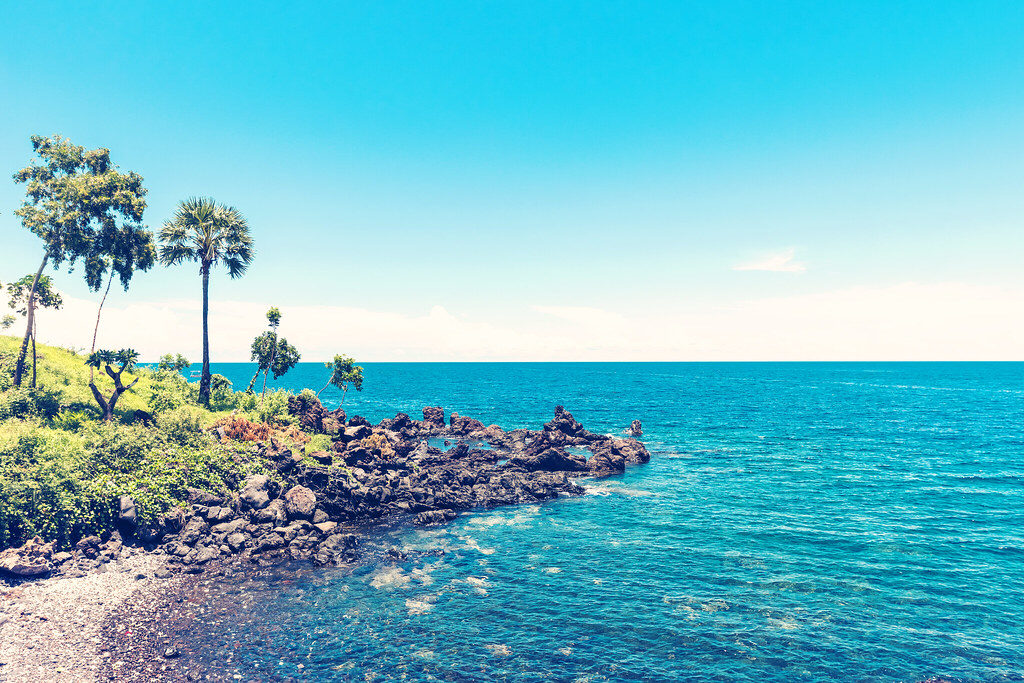
The question every guest asks me before they book is when should I come? — and the honest answer is that there's no single best month, only trade-offs you get to pick between. I live down on the Bukit, and I've watched the same beaches go from empty to bumper-to-bumper and back again across a year. Here's how the seasons actually feel from the ground, so you can choose the version of Bali you want.
The short version
The short version
The dry season (roughly May–September) gives you the best weather and the biggest crowds. The shoulder months — April–May and September–October — are the sweet spot: good skies, thinner crowds, gentler prices. The wet season (roughly October–March) is cheaper, greener, and nowhere near the washout the forums make it sound. And whenever you come, plan around .
The two seasons
Bali runs on two seasons, not four, and the difference is real.
Dry season — May to September . Sunny most days, the humidity drops enough that you stop sweating through your shirt by mid-morning, and the wind comes offshore on the west coast. That's peak surf on the Bukit and the west — the water goes glassy and the line-ups fill up. This is the Bali the postcards were shot in, and everyone knows it.
Wet season — October to March . Hotter, heavier air, and the rain. But here's what people get wrong: it's rarely all-day rain. A typical wet afternoon builds through a sticky morning, the sky goes slate-grey around two or three, and then it dumps — a warm, vertical downpour that rattles the roof for half an hour or an hour, and then clears to a washed, gold evening. You learn to plan the beach for the morning and read a book while it passes. The upside: the island turns absurdly green, the rice terraces glow, the skies get dramatic, there are fewer tourists, and villa prices soften.
The wet season has real downsides too, so I won't sugar-coat them:
- Flooding. Some low streets and a few surf-track lanes puddle up fast.
- Rougher boat crossings to the Nusa islands — the fast boats bounce, and the odd one gets cancelled when it's blowing.
- More mosquitoes. Standing water means more of them, and dengue is a genuine risk in the wet months — cover the details on the health page before you come.
Note
Don't write off the wet season on the weather alone. If you're happy building your day around a morning out and an afternoon downpour, you get a quieter, cheaper, greener island for it — and some of the best light of the year.
Month by crowds and price
Weather is only half the story. The other half is how many people are standing next to you, and what your room costs.
Peak — July, August, and the Christmas / New Year weeks . Highest prices, villas booked out months ahead, and the traffic thickens to a crawl through Canggu and Uluwatu. This is when the Australian and European school holidays land on top of the best weather. In August I've watched a beach club car park fill by ten in the morning and a twenty-minute drive turn into an hour. It's a fine time to be here — just go in knowing you're paying for it and sharing it.
The sweet spot — April, May, June, September, and early October. Good weather, noticeably thinner crowds, and prices off their peak. If you want the dry-season Bali without the dry-season scrum, this is the window I point people to first.
Quietest and cheapest — January and February . The wettest months, the emptiest, and the best value you'll find. If your priority is a good-value villa and space to yourself, and you can live with the afternoon rain, this is it.
Month-by-month at a glance
| Jan–Feb | Wettest, quietest, cheapest. Great value, green and dramatic — plan for afternoon rain and rougher Nusa boats. |
|---|---|
| Mar | Wet easing off. Nyepi usually falls here — check the date before you book flights. |
| Apr | Shoulder. Weather firming up, crowds still light — one of the best months. |
| May–Jun | Early dry season and shoulder. Excellent weather, manageable crowds. My top pick for first-timers. |
| Jul–Aug | Peak. Best weather, highest prices, busiest roads and beaches . Book well ahead. |
| Sep | Shoulder again. Still dry, crowds thinning. Quietly one of the best windows. |
| Oct | Early wet. Green returning, prices dropping, early October still often fine. |
| Nov–Dec | Wet, quiet and good value — until the Christmas / New Year weeks spike hard . |
Nyepi — the day the island stops
If there's one thing to plan around, it's this. Nyepi is the Balinese Day of Silence, the Saka new year, and it usually falls in March . For a full 24 hours the entire island shuts down. No going out, no lights after dark, no work, no traffic — shops closed, beaches closed, streets empty. Even the sea crossings stop.
Watch out
The airport closes on Nyepi. For that one day there are no flights in or out of Ngurah Rai . If you book travel across Nyepi without knowing the date, you can get stranded on either side of it. Check the exact date the moment you start planning, and don't schedule an arrival or departure on it.
Here's the thing, though — if you're already on the island, Nyepi is extraordinary, not something to dread. The night before, every village parades its : enormous, ghoulish papier-mâché monsters carried through the streets by torchlight, meant to draw out the bad spirits before the silence. Then the day itself: no engines, no screens, the sky at night thick with stars you never see otherwise. You stay in your villa or hotel, the staff bring you meals, and you slow all the way down. Guests who catch it by accident almost always tell me it was the best day of the trip.
Festivals and the year's rhythm
Bali's calendar isn't just the two seasons — it's stitched through with ceremony, and that affects your trip whether you plan for it or not.
and come round every 210 days on the Balinese calendar , so they drift across the Western year. In the run-up, every home and temple street sprouts — tall, arching bamboo poles hung with palm and offerings, curving over the road for miles. It's one of the most beautiful times to be here.
Beyond the big ones, ceremonies happen year-round — temple anniversaries, cremations, processions. A road you planned to drive can close for an afternoon while a procession passes, and some temples limit access during their own rites. It's rarely a problem, just something to hold loosely. The Bali festivals guide has the dates and what each one means.
Surf swaps coasts with the seasons
Quick note for anyone coming for waves, because the season decides where you surf. In the dry season, the offshore wind favours the west and the Bukit — Uluwatu, Padang, the whole southwest. In the wet season, the wind flips and the east coast turns on: Nusa Dua, Keramas, that side of the island. So "best time for surf" depends entirely on where you want to be standing — I break it all down in the surf-by-season guide.
So when should you go?
No single answer, so here's what I actually tell people, by what they're after:
- First time, want easy weather and no fuss — May, June, or September. Reliable skies, crowds off their peak, prices short of the July–August spike.
- On a budget, or you want it quiet — February or November. Accept the afternoon rain and you get the best value and the most space of the whole year.
- Coming for the surf — let the coast decide the month, and read the surf guide first.
- Dodging crowds above all — stick to the shoulder months and skip July, August, and the Christmas weeks entirely.
Whatever you choose, check the Nyepi date, pack for a warm-afternoon downpour if you're here in the wet, and don't let the "rainy season" label scare you off a green, cheap, half-empty island. Some of my favourite days here have been the wet ones.
Go deeper
The newsletter
I'm writing Bali the way I wish someone had written it for me
When to come, what it actually feels like on the ground, the one day the whole island goes silent — one honest, been-there guide at a time, from someone who lives here through every season. Want the next one?