Bali · Cycling
Cycling in Bali
From the van-shuttled Kintamani freewheel to the climbs that break strong legs — mapped by how hard you want to work, with the heat and the dogs named.
"Cycling in Bali" isn't one thing. For most visitors it's the Kintamani downhill — a van hauls you and a bike up to a volcano rim, and you freewheel back down through villages and rice terraces, barely pedalling. For a smaller, sweatier crowd it's road cycling: the same mountain roads, ridden up, in tropical heat that punishes anyone who underestimates it. And between those two sits the thing I'd actually send most people on — an easy loop through the paddies around Ubud. Pick the version that matches how hard you want to work, and Bali on a bike is one of the best days you'll have here. Pick wrong and it's either a bored roll-down or heatstroke on a hill.
The shape of cycling here
Here's the honest frame before you book anything. Bali has no cycling infrastructure to speak of — no bike lanes, no shoulder on most roads, and the main arteries through the south are a scrum of scooters, trucks and cars that treat lane markings as a suggestion. So good cycling here means getting off the big roads: onto the back lanes through the paddies, up into the highlands where the traffic thins, or onto the one flat coastal path that was actually built for it. Almost everything worth riding is either guided, van-supported, or a route you've researched carefully — not something you'd wing on a rented bike into Denpasar traffic.
The other constant is the heat. Bali sits a few degrees off the equator, and by mid-morning the sun and humidity turn even a gentle ride into hard work. The single best decision a cyclist makes here is starting at or before dawn.
The one everyone books: the Kintamani downhill
This is the Bali cycling experience, and for good reason. A van picks you up — usually from Ubud or the south — and drives you up to the rim of the Batur caldera around Kintamani, where you get a bike, a helmet, and a look at the volcano and its crater lake before you start. Then it's mostly downhill, a long, gentle roll back down toward Ubud through highland villages, coffee and citrus gardens, family compounds, a temple or two and terraced paddies, with the van shadowing the group in case anyone's had enough.
It's genuinely lovely, and it's the ride I'd point most first-timers at — you don't need to be fit, kids manage it, and you cover ground you'd never see from a car. But let me be straight about the touristy bits, because the brochures won't:
- "Downhill" doesn't mean effortless. Gravity does most of the work, but there are flat stretches and short kicks up, and by late morning you're pedalling in real heat. It's easy, not zero.
- Groups vary wildly. A small group with a good guide who stops to explain the irrigation or lets you into a family compound is a completely different day from a big convoy that herds you past a photo-stop and a set-menu lunch.
- It is popular, and it feels it on the well-worn stretches. That's the trade for how easy and scenic it is.
Most run about half a day, hotel to hotel, with a bike, helmet, water and lunch included.
Tip
Book a guided downhill rather than trying to rig one yourself — the whole point is the van doing the climb and the pickup, and a guide who reads the road and opens doors a solo rider rolls straight past. Ask about group size and whether the price includes the bike, helmet and lunch before you commit; that's where the good and the forgettable operators part ways.
Book a guided ride or the Kintamani downhillCheck availabilityEasy does it: the Ubud rice-terrace loops
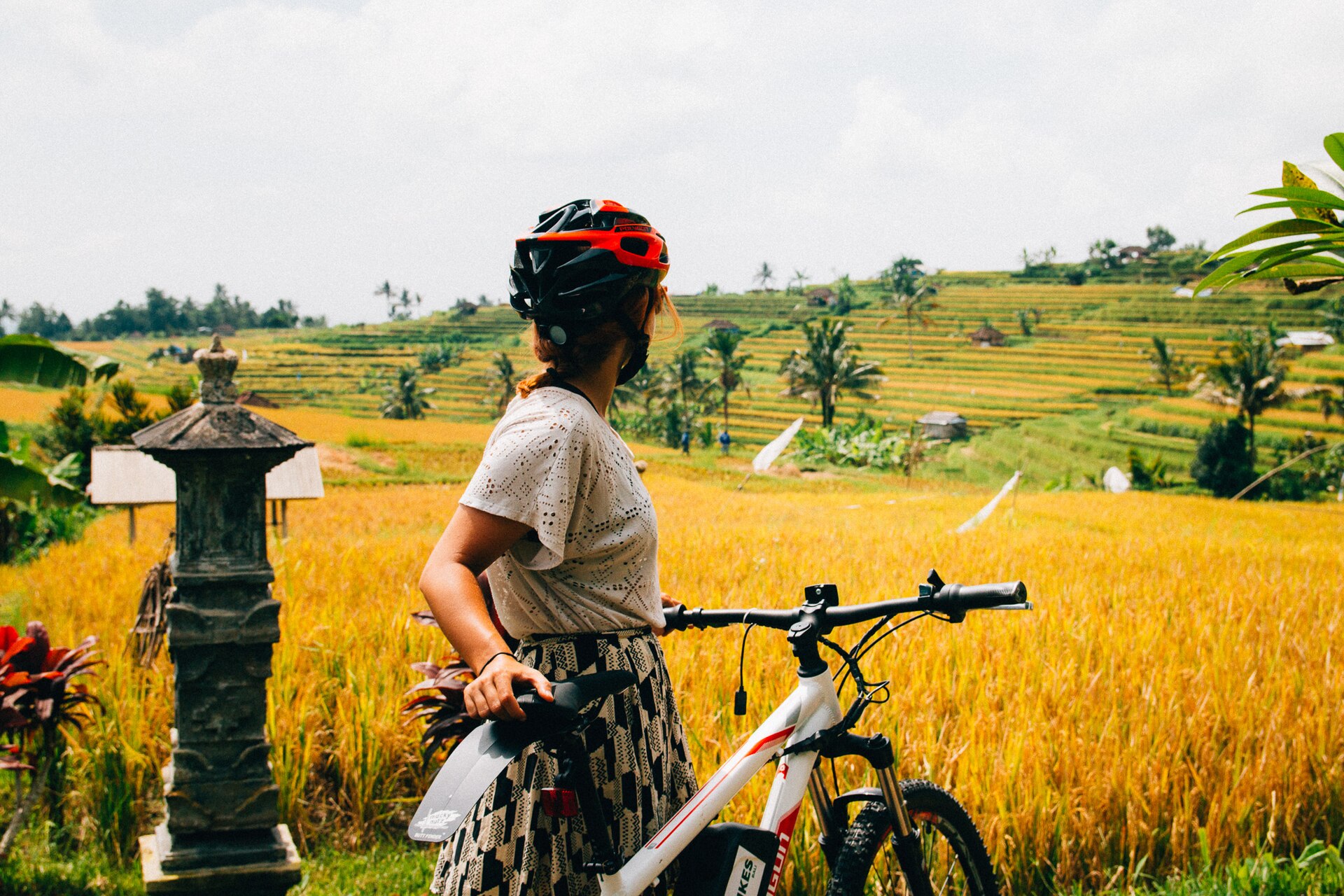
If the downhill is the postcard, this is the ride I'd actually recommend to most people who like being on a bike. The countryside around Ubud is laced with quiet lanes threading between rice paddies, past family temples and villages, and you can ride it self-guided if you've got a sense of direction, or with a guide who knows which turnings stay off the traffic and which family you can pause at.
These loops are easy to moderate — flatter than the highlands, but Bali is rarely truly flat, so expect short lumps that get your heart going in the heat. The reward is the closest, slowest look at working rural Bali you can get on two wheels: the terraces stepping down a valley, the irrigation channels the subak system feeds, someone drying rice on a tarp, a temple ceremony spilling into the lane. Go early, before the day-trip traffic and the sun both arrive.
If you want the story behind everything you're rolling past — the terraces, the water temples, the thousand-year-old cooperative that carves them — that's its own rice terraces and subak guide.
For the fit: road cycling and the real climbs
Bali surprises serious cyclists. Once you're off the congested south and into the hills, there's proper climbing — long, sustained ascents in heat that makes the gradient count double. This is the island for you if the point is to work.
- The Bedugul and Munduk mountain roads — long climbs up into the cool central highlands past the crater lakes, then rolling ridge roads through hydrangea and clove country. The best sustained road riding on the island, and cool enough up top to actually enjoy it.
- Kintamani — yes, the same rim the downhill vans drive up. Ridden the other way, it's a real ascent from whichever side you take.
- The Bukit rollers — the limestone peninsula off the south end is short, sharp climbs one after another, plus long, exposed, hot coastal stretches with no shade. Punchy and deceptively tiring.
Two hard truths for road riders. First, the heat is the real climb — hydrate harder than you think you need to, carry more water than feels sensible, and start in the dark so you're descending before the worst of it. Second, the main roads are dangerous — narrow, no shoulder, and shared with scooters that pass close. Route yourself onto secondary roads and highland stretches, ride defensively, and don't assume a driver has seen you.
Flat and easy, or quiet and coastal: Sanur and Amed
Not every ride needs a hill or a van. Two coasts serve the more relaxed cyclist:
- Sanur has a paved beachfront path running most of the length of its seafront — flat, car-free, and about the only place in Bali built for casual, unhurried riding. Rent a beach cruiser, roll from café to temple to fishing boats and back, and let the kids ride alongside you. It's the low-stress option bar none.
- Amed, on the quiet east coast, is a different kind of easy: low-traffic roads winding between black-sand fishing villages and dive coves, with the bulk of Mount Agung filling the sky inland. It's not flat — there are lumps between the bays — but the roads are calm enough to ride without a guide holding your hand, which is rare here.
Off-road and electric: mountain bikes, gravel and e-bikes
Beyond sealed roads, there's a growing scene for mountain biking and gravel — dirt tracks through jungle and terraces, riverbed trails, dropping down from the highlands on surfaces the downhill vans never touch. This is guide territory: the good trails aren't signposted, some cross private land and ceremonies, and a local who knows them turns a confusing scramble into a great day.
The quiet revolution, though, is the e-bike. Electric assist has become common on Bali tours, and it's the great equaliser for exactly this climate — it flattens the hills and, more to the point, takes the heat out of the effort so you're looking at the terraces instead of gasping up them. If a normal bike in tropical heat sounds like a bad time but you still want to cover real ground, an e-bike is the answer I'd give you. Plenty of Ubud and highland operators now run them.
The sharp edges: heat, traffic and dogs
Watch out
The three things that actually go wrong on a bike here aren't dramatic crashes — they're heat, traffic and dogs.
- Heat and humidity are the real hazard. Ride at or before dawn, carry more water than you think you need, and wear proper sun protection — the equatorial sun burns you even under cloud. Overheating creeps up; if you're cooked, get in the van or the shade and stop being a hero.
- Traffic and the total lack of cycling infrastructure. There are no bike lanes and no shoulders on the main roads, and drivers don't expect cyclists. Stick to back lanes and highland roads, or go guided so someone's picking the safe line. Watch for scooters passing close and pulling out without looking.
- Village dogs. Rural Bali has territorial free-roaming dogs that will chase a bike, especially at dawn. Usually it's noise, not teeth — don't panic, don't sprint (you won't win), slow and stay calm and they generally back off at the edge of their patch. A bite here means a rabies-risk trip to a clinic, so it's worth taking seriously.
Bikes, hire and getting them around
You don't need to bring a bike. Rental is easy — guided tours include a bike and helmet in the price, and Ubud, Sanur, Canggu and the beach towns have shops renting everything from beach cruisers to mountain bikes and, increasingly, e-bikes by the day. For a serious road cyclist chasing the climbs, a dedicated road-bike hire exists but is more specialist; bring your own pedals and shoes if you're particular.
Moving bikes around the island is the same problem as moving anything else here — the traffic is relentless and the distances are longer than the map admits. That's exactly why the van-supported tour model works so well for cycling: someone else drives you and the bikes up to the good riding, so you never have to pedal through Denpasar to reach a nice road. If you're riding independently, plan your transport to and from the trailhead the way you'd plan any Bali day trip, and don't assume you'll just ride between regions.
So, is Bali good for a cycling trip?
Yes — if you match the ride to yourself. Want easy and scenic with zero fitness required? The Kintamani downhill or an Ubud paddy loop, guided, early. Actually like riding and want to see rural Bali slowly? Those same Ubud lanes, or the Sanur path and Amed's quiet coast. Fit and here to suffer up a mountain? The Bedugul, Munduk and Kintamani climbs will give you your money's worth — just respect the heat. Want to cover ground without the sweat? An e-bike solves it. Whatever you pick: ride at dawn, drink more than you think, stay off the big roads, and keep your cool when the dogs come out.
The newsletter
I'm writing Bali the way I wish someone had written it for me
The downhill that isn't quite effortless, the paddy lanes worth the early start, the climbs that break strong legs and the dogs at dawn — one honest, been-there guide at a time. Want the next one?