Home › Bali › The Bukit › Nusa Dua
Bukit · Resorts & watersports
Nusa Dua & Tanjung Benoa
A gated, manicured resort bubble with the calmest swimming beaches in South Bali — brilliant for some travellers, a sanitised miss for others.
Nusa Dua is Bali's planned luxury enclave — a gated strip of big-brand resorts, raked lawns, security barriers and the island's calmest swimming beaches. Whether that sounds like heaven or like you've flown 14 hours to leave Bali behind is exactly the question this page answers. Next door, Tanjung Benoa is the watersports strip: jet-skis, parasailing, and a turtle-island trip that comes with real animal-welfare caveats.
Who it's for — and who should skip it
Be honest with yourself before you book here. Nusa Dua suits families with small kids, nervous swimmers, honeymooners who want a flop-and-drop resort, and anyone who values calm, clean, hassle-free over authentic. The beaches are gentle and reef-protected, the pavements are smooth, there are no touts hounding you on the sand, and you can walk the whole beachfront promenade safely after dark.
It is the wrong base if you came for "real" Bali — , rice terraces, ceremony, scruffy charm. The enclave is a manicured bubble: everything inside the gates is resort-priced, the "village" (Bali Collection mall) is a shopping centre, and you'll need a driver for anything characterful. Ubud, Canggu or the west Bukit beaches deliver that; Nusa Dua deliberately doesn't.
Note
Nusa Dua ≠ Nusa Penida. The similar names trip people up constantly. Nusa Dua is this mainland resort strip on the Bukit; Nusa Penida is a separate island off the southeast coast (the Kelingking "T-Rex cliff" one). Don't book a hotel in the wrong place.
Why Nusa Dua exists — it was built on purpose
Nusa Dua doesn't feel like the rest of Bali because it was never meant to. It's the one part of the island that was master-planned from a blank slate. In the 1970s, as international tourism took off, the government commissioned a development plan — backed by the World Bank and drawn up by foreign consultants — that recommended concentrating big international resorts in a single purpose-built enclave rather than letting them sprawl across the island.
They chose the dry, sandy, sparsely-farmed southeastern tip of the Bukit — land that grew little and displaced few — and a state company, the Bali Tourism Development Corporation (BTDC), laid in the roads, water, power and landscaping, then leased serviced plots to the hotel chains. The first resorts opened in the early 1980s, and the enclave grew into the gated strip you see now. The whole idea was to quarantine mass tourism — to keep its traffic, water demand and cultural friction in one contained zone, away from the temples and rice villages of the heartland. Love it or hate it, the sanitised feel is the plan working exactly as intended.
Note
Is it a foreigners-only zone? No. Every beach in Bali is legally public, Indonesian families holiday here too, and there's no gate you need a foreign passport to pass. But it is a deliberate high-end tourist district — prices, signage and the whole atmosphere are pitched at international resort guests, which is why it can feel like a world sealed off from the island around it.
The beaches, honestly
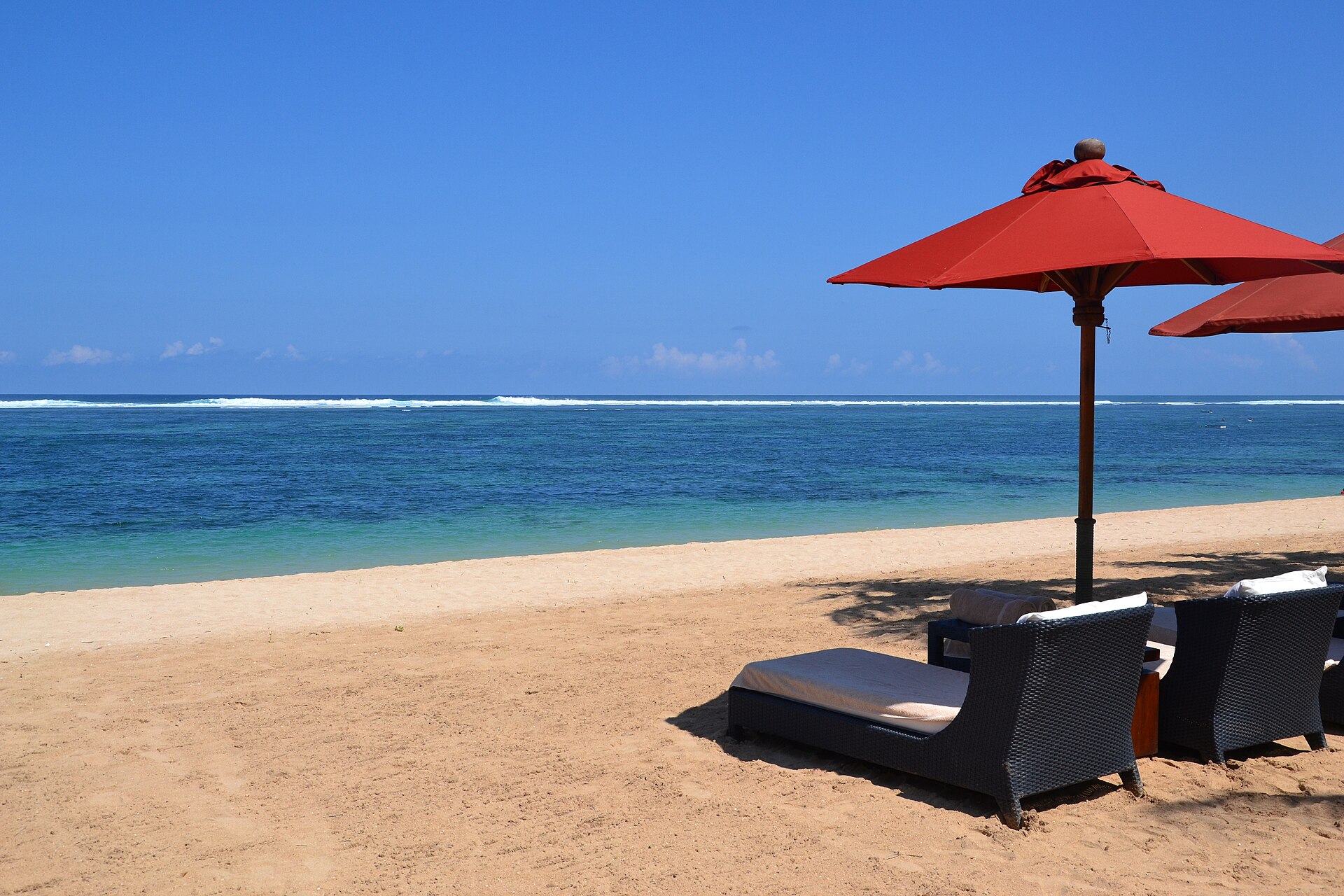
The swimming here is genuinely the best in South Bali for anyone who doesn't want to fight surf: shallow, clear, sheltered by an offshore reef so the water stays flat. At low tide the reef flats can get very shallow and rocky — reef shoes help and the swimming window shrinks, so check the tide chart before you commit to a long swim.
The public can legally access all Bali beaches, but the resorts control the sun-loungers. Expect to either be a guest or to pay a day-bed / minimum-spend fee at a beach club if you want to settle in. The 5 km beachfront promenade linking the hotels is free, flat and genuinely lovely for a morning walk or run.
The Water Blow
The enclave's one free natural sight is the Water Blow — a rocky point behind the Grand Hyatt where Indian Ocean swells funnel into a cleft and explode upward in spray. It's a fun 15-minute stop on a big-swell day and photographs well; on a calm day it's underwhelming. Stay behind the barriers — people have been swept off wet rocks here. Free to enter, though parking may cost a little.
Pura Geger: the temple on the point
For all the manicured newness, the enclave has a genuine piece of old Bali on its southern edge: Geger, a small clifftop on the headland above Geger Beach, past the Mulia. It's a working temple with a candi-bentar split gate and shrines looking straight out over the Indian Ocean, and the short walk down to the quiet white-sand cove below it is one of the few genuinely local-feeling corners left in Nusa Dua. Come respectfully — this is in use, not a photo set: wear a if you enter the temple grounds, keep back from anyone praying, and don't climb the shrines.
Tanjung Benoa watersports — and the turtle-island caveat
A few minutes north, Tanjung Benoa is the activity hub: parasailing, jet-ski, banana boat, flyboard, the "seawalker" helmet dive. It's touristy and packaged, but the calm bay makes it beginner-friendly and it's a decent half-day if you've got restless kids.
| What's on offer | Parasailing, jet-ski, banana boat, flyboard, seawalker, glass-bottom-boat + turtle-island combo |
|---|---|
| Rough prices | Individual activities from ~150,000–500,000 IDR each; heavily negotiable and cheaper as a bundle |
| Best time | Morning, calmer water and cooler; book direct at the beach or via an operator |
| Pay | Agree the total and what's included before you start — add-ons and "insurance" get tacked on |
Watch out
The "turtle island" (Pulau Penyu) trip needs a clear head. It's sold as a conservation experience, but many operators run roadside menageries where turtles, bats, snakes and iguanas are kept in poor conditions purely for tourist selfies — handling stressed animals is not conservation. If turtles matter to you, skip the photo-op tour and choose a genuine hatchery/release project instead, or give it a miss. Don't pay to hold a turtle.
Tip
Booking watersports ahead locks in a set price and a legitimate operator, which sidesteps the beach-side haggling and the surprise add-ons — worth it if you want a fixed cost.
Find a tour with pickupCheck availabilityA realistic day here
Pair the strip's calm mornings with the peninsula's better evenings: swim or do watersports before the heat, escape the bubble for the afternoon, and drive 15 minutes north to Jimbaran Bay for a grilled-seafood sunset dinner on the sand — the combination gets you the safe-and-easy plus a genuine Bali evening. If the manicured thing wears thin, the wilder Bukit beaches are close too.
Practical notes
| Getting there | ~15–20 min from the airport, ~30–45 from Kuta/Seminyak; a fixed-price airport taxi or pre-booked driver is easiest |
|---|---|
| Getting around | Ride-hail (Grab/Gojek) works but pickups inside the resort gates can be restricted; walking the promenade is fine |
| Beach access | All beaches public; loungers/beach clubs charge or require you to be a guest |
| Best time | Dry season (May–Oct) for reliable sun; swim around mid-to-high tide |
| Good to know | Everything inside the enclave is resort-priced — eat and shop outside the gates for normal Bali prices |
The newsletter
I'm writing Bali the way I wish someone had written it for me
The Bukit beaches, Jimbaran, Nusa Penida — one honest, been-there guide at a time. Want the next one?