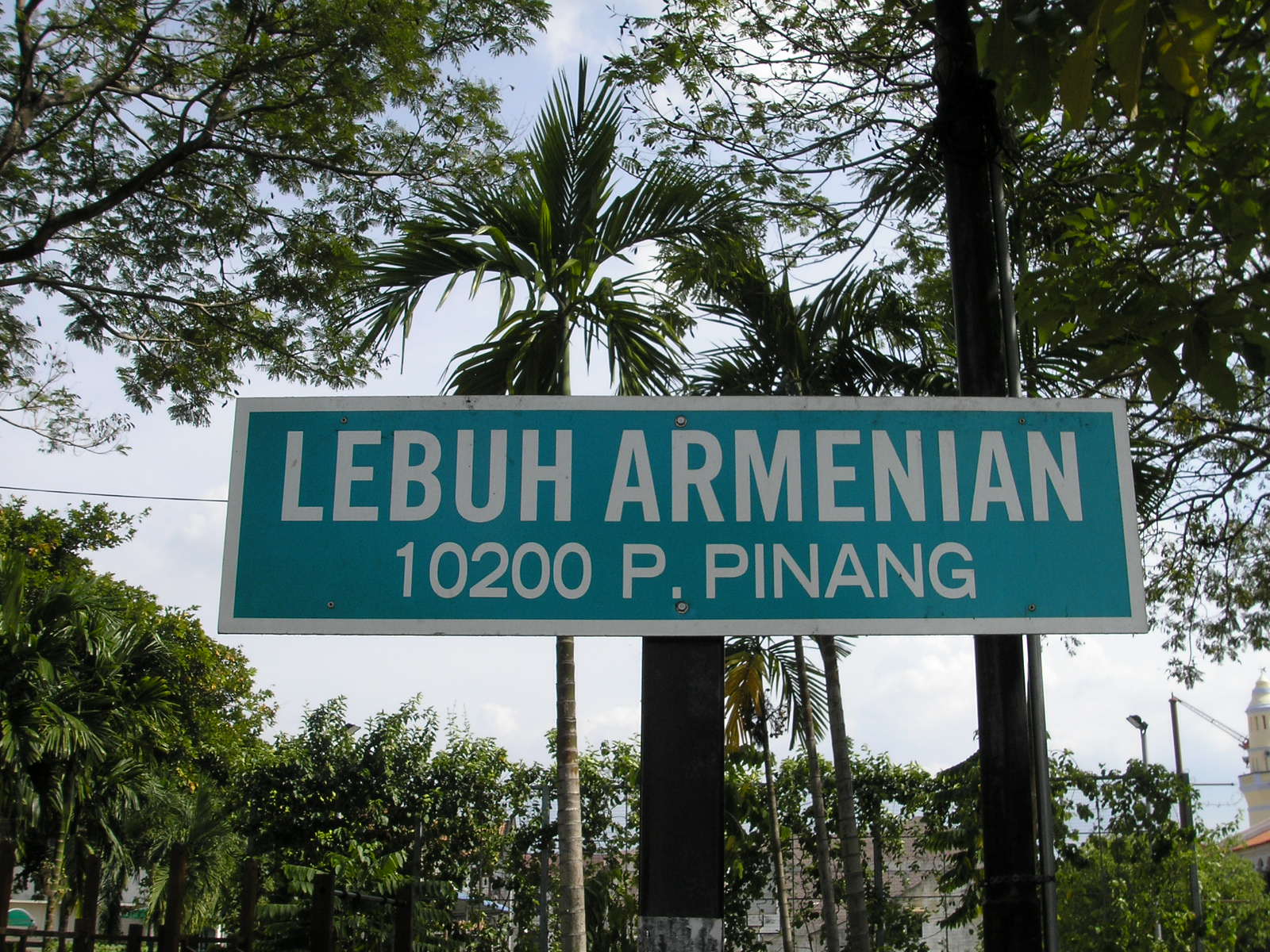
Armenian Street — Lebuh Armenian on the map — is the single lane most people mean when they say "the mural street" in George Town. It's where Ernest Zacharevic painted Little Children on a Bicycle in 2012, and it's still the densest cluster of murals, wrought-iron caricature sculptures and restored shophouses in the old town, even though the trail has long since spread well beyond it.
What Armenian Street actually is
The street runs a couple of hundred metres through the heart of the UNESCO core, between Lebuh Pantai and the waterfront, named for the Armenian traders who settled here in the 19th century — one of the smaller communities that gave George Town its layered mix of merchants. Today it reads mostly as a street-art pilgrimage route, but the bones underneath are the same shophouse architecture as the rest of the heritage zone: narrow two-storey units, five-foot covered walkways, courtyard air wells.
| Best known for | Little Children on a Bicycle, Ernest Zacharevic, 2012 |
|---|---|
| Length | A short lane, walkable end to end in a few minutes |
| Character | Restored shophouses, cafes, galleries and gift shops around the murals |
| Crowds | Busiest late morning through afternoon; queues form for the bicycle mural |
The bicycle mural, and why it queues
The Little Children on a Bicycle mural — two kids on a real bicycle bolted to the wall, painted so the whole thing reads as one scene — is the most photographed piece of street art in Malaysia by most accounts, and it draws a genuine queue by mid-morning: people wait their turn to climb onto the bike for a photo. It's touristy in the fullest sense of the word, and it's also the reason a decade of copycat murals exist across Southeast Asia, so there's a case for seeing the original rather than skipping it on principle.
Tip
Go before 9am if you want the mural without a queue behind you in the shot. By late morning it's a genuine line, and by afternoon tour groups cycle through in waves.
Like most of Zacharevic's outdoor work, the paint is exposed to tropical sun and rain year-round, so its condition drifts — expect touch-ups, fading, or occasional vandalism between visits rather than the crisp version you've seen in photos.
The wider mural cluster
Armenian Street and the streets that meet it — Cannon Street, Lebuh Cintra — carry most of the other well-known pieces: wrought-iron caricature sculptures depicting old trades and local sayings (a rickshaw puller, a boy on a swing), and murals by artists who followed Zacharevic's lead through the 2010s, official and unofficial alike. Some of what's on the walls now is recent work covering over pieces that faded or were damaged; a mural you've seen online may not be the mural you find on the wall.
| Wrought-iron caricatures | Small steel-rod sculptures dotted along the street, mounted 2009 onward, depicting old trades and sayings |
|---|---|
| Cannon Street | Runs off Armenian Street, its own cluster of murals and quieter than the main lane |
| Turnover | Murals get repainted, damaged or removed — treat any specific piece's survival as unconfirmed |
I've written the whole trail up separately, because it now runs well past this one street — see George Town street art for the fuller map of where else to look and which pieces have held up.
Shophouses, cafes and the Yap Kongsi
Away from the murals, Armenian Street is one of the better-restored stretches of shophouse in the old town — sympathetically renovated units now hold cafes, galleries and boutique guesthouses rather than sitting empty, which is part of why it's stayed pleasant to walk rather than becoming purely a photo corridor. Partway along sits the Yap Kongsi, a smaller clan house than Khoo Kongsi but with its own claim to history: it's associated with Dr Sun Yat Sen, who used George Town as a base for organising the Chinese revolutionary movement in the early 1900s, and the street still carries a memorial marker to that period.
The clan jetty at the end
Walk Armenian Street through to the waterfront and you come out near the clan jetties, the wooden houses on stilts built by Chinese dock-worker families in the late 19th century. It's a natural continuation of the same walk rather than a separate trip — see the clan jetties for which one to visit and what's respectful to photograph.
Getting there
Armenian Street sits inside the compact heritage grid, close to the waterfront — there's no reason to arrive any way but on foot if you're already in George Town. A to the old town generally drops you a short walk away, since much of the surrounding grid is one-way or pedestrianised around peak hours.
| From the Street of Harmony | A short walk north, a few minutes |
|---|---|
| From the clan jetties | Walk straight through to the waterfront end |
| Currency | Priced in , same as the rest of Malaysia — most stalls and cafes are cash-friendly but some now take cards |
Go deeper
The newsletter
I'm writing Penang street by street, the way I actually know it
The murals that have held up, the ones quietly repainted, the corner nobody photographs but should — want the next guide as I write it?